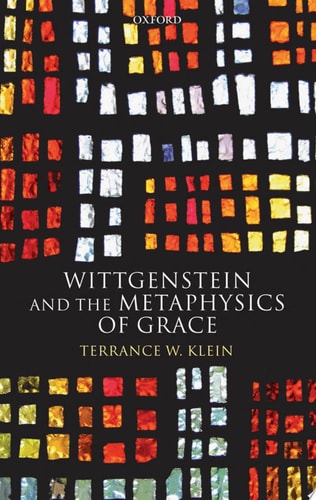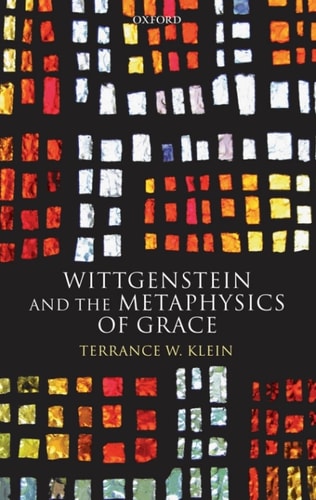
Wittgenstein and the Metaphysics of Grace
0
0
As an Amazon Associate and affiliate partner, Menrva Books earns from qualifying purchases. Learn more
Author Description
What is the meaning of the word `grace'? Can Wittgenstein's maxim that the meaning of a word is its usage help explicate the claims that Christians have made about grace? When Christians use the word, they reference within language the point of contact between humanity and the divine. Terrance W. Klein suggests that grace is not an occult object but rather an insight, a moment when we perceive God to be active on our behalf. Klein examines the biblical evidence that grace begins as a recognition of God's favour, before considering Augustine as the theologian who champions history rather than nature as the place of encounter with grace. Aquinas' work on grace is also explored, retrieving the saint's thought on three seminal concepts: nature, form, and the striving intellect. Overall, Klein suggests that grace is the perception of a form, an awareness that the human person is being addressed by the world itself.
Menrva's Summary
THE THESIS
This book investigates whether Ludwig Wittgenstein’s linguistic philosophy regarding the usage of words can clarify the theological concept of grace. Terrance W. Klein, a theologian, employs a philosophical framework to analyze how grace functions as a point of contact between the human and the divine. By moving away from viewing grace as an occult object, Klein argues that it is an insight or a specific perception of God’s activity within human experience.
THE SCOPE MAP
What You Will Find
- An application of Wittgenstein’s 'meaning as usage' theory to religious language.
- A historical analysis of grace through the works of Augustine and Thomas Aquinas.
- An exploration of the concepts of nature, form, and the striving intellect in theological discourse.
Scope Limits
- The text does not provide a comprehensive survey of all Christian denominations' views on grace.
- It does not offer a secular or purely atheistic critique of religious terminology.
THE AUTHORITY PERSPECTIVE
Scholars and readers often note the academic density of the prose, which requires a foundational understanding of both Wittgensteinian philosophy and classical theology. Experts highlight this as a rigorous attempt to bridge the gap between analytic philosophy and traditional Christian doctrine.
Page Count:
173
Publication Date:
2007-01-01
Publisher:
Oxford University Press
ISBN-10:
0191525391
ISBN-13:
9780191525391
Religion
Philosophy
Theology
Christianity
Metaphysics
Grace Theology