Visions of Innovation: The Firm and Japan
0
0
As an Amazon Associate and affiliate partner, Menrva Books earns from qualifying purchases. Learn more
Author Description
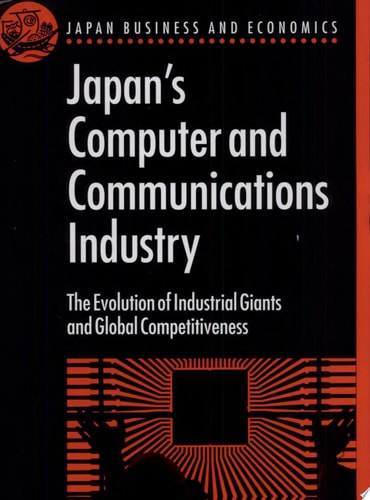
Computers, telecommunications equipment, semiconductors—the products and technologies of the information and communications industry (IC)—have transformed our world. Most of these products were initially developed in Western countries, but by the early 1990s some of the world's largest companies in the field were Japanese. This book explains the resurgence of Japan's IC giants, their global status, and their strengths and weaknesses. Empirical scrutiny of their evolution is complemented by the author's own theory of the most appropriate method for studying the dynamics of industrial change. The author argues that in order to understand the evolution of IC companies and industries, it is necessary to create a theory of the firm capable of encompassing the development of real firms in the real world in real time. This approach stresses the importance of the beliefs that are constructed in the firm under conditions of 'interpretive ambiguity', which guide the firm's decisions and its reactions to new technologies. Lengthy analyses of NEC and NTT (by far the world's largest company in terms of market value; its future currently under government scrutiny), and of the computing, switching, and optical fibre industries, illustrate these concepts. Based on over 600 interviews over eight years with Japanese leaders, this book provides important new material on the past, present, and future of Japanese industry.
Menrva's Summary
THE THESIS
This book investigates the mechanisms behind the rise of Japanese information and communications (IC) giants and proposes a new theoretical framework for understanding industrial evolution. Martin Fransman, an expert in industrial economics, utilizes extensive empirical data to argue that traditional economic models fail to capture the complexity of real-world firm development. He introduces a theory of the firm that emphasizes 'interpretive ambiguity,' suggesting that corporate decisions are driven by the internal construction of beliefs rather than purely rational optimization under perfect information.
THE SCOPE MAP
What You Will Find
- Detailed case studies of NEC and NTT.
- Analysis of the computing, switching, and optical fiber industries.
- A theoretical framework for studying industrial change in real time.
- Empirical data derived from over 600 interviews with Japanese industry leaders.
Scope Limits
- The analysis is primarily focused on the Japanese IC sector during the late 20th century.
- The text does not provide a comprehensive history of Western IC development, using it only as a comparative baseline.
THE AUTHORITY PERSPECTIVE
Experts recognize this work as a significant contribution to the study of Japanese industrial policy and corporate strategy. Readers frequently note the academic density of the prose, which is best suited for those with a background in economics or business management.
Page Count:
288
Publication Date:
1999-01-01
Publisher:
Clarendon Press
ISBN-10:
0191521787
ISBN-13:
9780191521782
Economics
Business
Computer industry
Corporate Strategy
Japan
Organizational change
Technology
Community Tags
Similar Books