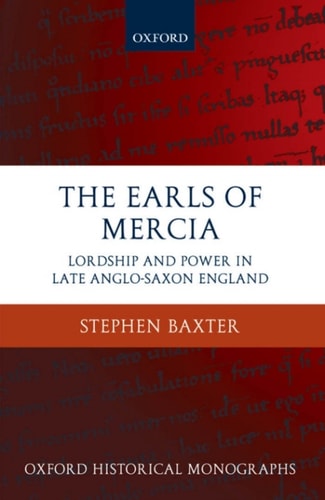
The Earls of Mercia: Lordship and Power in Late Anglo-Saxon England
0
0
As an Amazon Associate and affiliate partner, Menrva Books earns from qualifying purchases. Learn more
Author Description
This book constitutes a major reappraisal of the late Anglo-Saxon state on the eve of its demise. Its principal focus is the family of Ealdorman Leofwine, which obtained power in Mercia and retained it throughout an extraordinary period of political upheaval between 994 and 1071. In doing so it explores a paradox: that earls were extraordinarily wealthy and powerful yet distinctly insecure. The book contains the first extended treatment of earls' powers in late Anglo-Saxon England and shows that although they wielded considerable military, administrative and political powers, they remained vulnerable to exile and other forms of political punishment including loss of territory. The book also offers a path-breaking analysis of land tenure and the mechanics of royal patronage, and argues that the majority of earls' estates were held from the king on a revocable basis for the duration of their period in office. In order to compensate for such insecurities, earls used lordship and religious patronage to construct local networks of power. The book uses innovative methods for interpreting the representation of lordship in Domesday Book to reconstruct the affinity of the earls of Mercia. It also examines how the house of Leofwine made strategic use of religious patronage to cement local power structures. All this created intense competition between the earls of Mercia and their rivals for power, both at court and in the localities, and the book explores how factional rivalry determined the course of politics, and ultimately the fate of the late Anglo-Saxon state.
Menrva's Summary
THE THESIS
This book investigates the nature of lordship and political power in late Anglo-Saxon England by examining the rise and influence of the house of Leofwine. Stephen Baxter, a historian specializing in the medieval period, utilizes extensive archival research and land tenure records to challenge existing perceptions of the Anglo-Saxon state. He argues that the apparent strength of the Mercian earls was fundamentally undermined by the revocable nature of their landholdings, forcing them to rely on complex networks of patronage and religious influence to maintain their status.
THE SCOPE MAP
What You Will Find
- Analysis of the political trajectory of the family of Ealdorman Leofwine between 994 and 1071.
- Examination of land tenure systems and the mechanics of royal patronage.
- Methodology for interpreting lordship structures within the Domesday Book.
- Discussion of factional rivalry and its impact on the stability of the late Anglo-Saxon state.
Scope Limits
- The study is primarily focused on the house of Leofwine and the region of Mercia rather than a comprehensive history of all Anglo-Saxon earldoms.
- It does not provide a general narrative history of the entire Anglo-Saxon period, focusing instead on the specific political dynamics leading to the state's demise.
THE AUTHORITY PERSPECTIVE
Scholars recognize this work as a significant contribution to the study of Anglo-Saxon political structures and land management. Readers frequently note the academic density of the prose, which is intended for specialists and students of medieval history.
Page Count:
300
Publication Date:
2007-01-01
Publisher:
OUP Oxford
ISBN-10:
0191528218
ISBN-13:
9780191528217
History
Biography
Political History
European History
British History
Anglo-Saxons
Community Tags
Similar Books