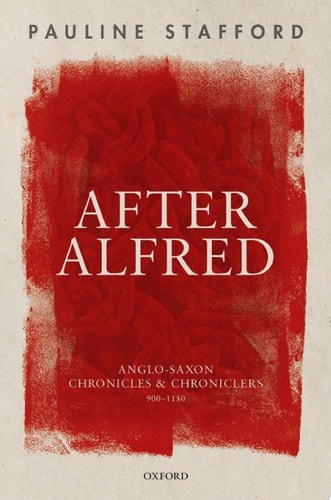
After Alfred: Anglo-Saxon Chronicles and Chroniclers, 900-1150
0
0
As an Amazon Associate and affiliate partner, Menrva Books earns from qualifying purchases. Learn more
Author Description
The vernacular Anglo-Saxon Chronicles cover the centuries which saw the making of England and its conquest by Scandinavians and Normans. After Alfred traces their development from their genesis at the court of King Alfred to the last surviving chronicle produced at the Fenland monastery of Peterborough. These texts have long been part of the English national story. Pauline Stafford considers the impact of this on their study and editing since the sixteenth century, addressing all surviving manuscript chronicles, identifying key lost ones, and reconsidering these annalistic texts in the light of wider European scholarship on medieval historiography. The study stresses the plural 'chronicles', whilst also identifying a tradition of writing vernacular history which links them. It argues that that tradition was an expression of the ideology of a southern elite engaged in the conquest and assimilation of old kingdoms north of the Thames, Trent, and Humber. Vernacular chronicling is seen, not as propaganda, but as engaged history-writing closely connected to the court, whose networks and personnel were central to the production and continuation of these chronicles. In particular, After Alfred connects many chronicles to bishops and especially to the Archbishops of York and Canterbury. The disappearance of the English-speaking elite after the Norman Conquest had profound impacts on these texts. It repositioned their authors in relation to the court and royal power, and ultimately resulted in the end of this tradition of vernacular chronicling.
Menrva's Summary
THE THESIS
This work investigates the development, political function, and eventual decline of the Anglo-Saxon Chronicles as a tradition of vernacular history-writing between 900 and 1150. Pauline Stafford, a scholar of early medieval history, utilizes an analysis of surviving manuscripts and lost texts to challenge traditional interpretations of these chronicles as mere nationalistic propaganda. She argues that the chronicles functioned as an ideological tool for a southern elite, documenting the assimilation of northern kingdoms and reflecting the shifting relationship between chroniclers and royal power structures.
THE SCOPE MAP
What You Will Find
- Analysis of all surviving manuscript chronicles and identification of key lost texts.
- Examination of the connection between chroniclers and the ecclesiastical elite, specifically the Archbishops of York and Canterbury.
- A comparative approach integrating European medieval historiography with English vernacular traditions.
Scope Limits
- The study focuses primarily on the period from the court of King Alfred to the final entries at Peterborough.
- It does not provide a comprehensive linguistic analysis of the Old English dialects used in the manuscripts.
THE AUTHORITY PERSPECTIVE
Scholars recognize this text as a significant re-evaluation of the Anglo-Saxon Chronicles, moving beyond traditional nationalistic readings to focus on the political and social networks of the authors. Readers frequently note the academic density of the prose and the author's meticulous attention to the manuscript tradition.
Page Count:
394
Publication Date:
2020-01-01
Publisher:
OUP Oxford
ISBN-10:
0192603418
ISBN-13:
9780192603418
History
Anglo-Saxons
Great Britain
European History
Literary Criticism
British History
Historiography
History
Europe