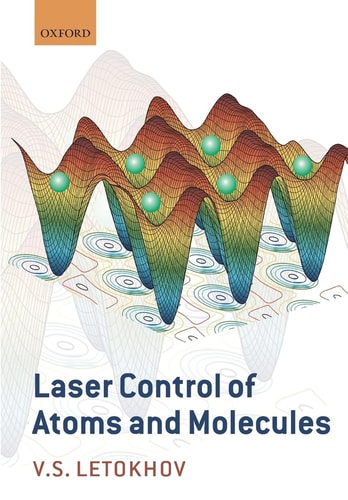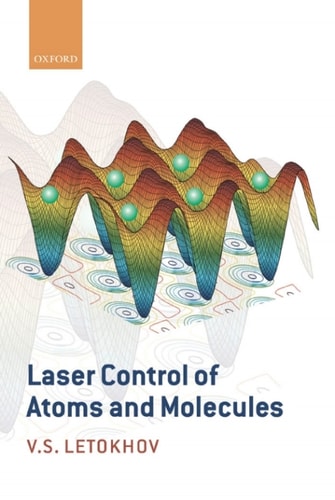
Laser Control of Atoms and Molecules
0
0
As an Amazon Associate and affiliate partner, Menrva Books earns from qualifying purchases. Learn more
Author Description
Rather different problems can be lumped together under the general term 'laser control of atoms and molecules'. They include the laser selection of atomic and molecular velocities for the purpose of Doppler-free spectroscopy, laser control of the position and velocity of atoms (i.e. laser trapping and cooling of atoms), and laser control of atomic and molecular processes (ionization, dissociation) with a view of detecting single atoms and molecules and particularly separating isotopes and nuclear isomers. Over the last decades the principal problems posed have been successfully solved, and many of them have evolved remarkably in the subsequent investigations of the international research community. For example, the solution of the problem of laser cooling and trapping of atoms has given birth to the new field of the physics of ultracold matter, i.e. quantum atomic and molecular gases. The laser non-coherent control of uni-molecular processes has found an interesting extension in the field of laser coherent control of molecules. The concept of laser control of position has been successfully demonstrated with microparticles (optical tweezers), concurrently with investigations into atomic control. The laser photo-ionization of molecules on surfaces has led to the development of novel techniques of laser-assisted mass spectrometry of macromolecules, and so on. The aim of this book is to review these topics from a unified or 'coherent' point of view. It will be useful for many readers in various fields of laser science and its applications.
Menrva's Summary
THE THESIS
This book investigates the fundamental principles and diverse applications of utilizing laser radiation to manipulate the motion, state, and chemical behavior of atoms and molecules. Vladilen Letokhov, a prominent researcher in laser spectroscopy, synthesizes decades of experimental progress to provide a unified framework for understanding how light-matter interactions enable precise control over atomic and molecular systems. The text bridges the gap between early theoretical concepts and the subsequent evolution of these techniques into modern fields like ultracold matter physics and advanced mass spectrometry.
THE SCOPE MAP
What You Will Find
- Theoretical foundations of Doppler-free spectroscopy and velocity selection.
- Methodologies for laser cooling and trapping of neutral atoms.
- Mechanisms for selective ionization and dissociation of molecules.
- Applications in isotope separation and nuclear isomer detection.
- Discussion of optical tweezers and laser-assisted mass spectrometry.
Scope Limits
- The text does not provide a comprehensive manual for experimental laboratory setups.
- It focuses primarily on the physical principles rather than exhaustive engineering specifications for commercial laser hardware.
THE AUTHORITY PERSPECTIVE
Experts recognize this work as a foundational synthesis of laser-matter interaction physics, particularly for those interested in the historical development of atomic manipulation. Readers frequently note the technical density of the prose, which is best suited for graduate-level students and researchers in the field of quantum optics.
Page Count:
328
Publication Date:
2007-01-01
Publisher:
OUP Oxford
ISBN-10:
0191523712
ISBN-13:
9780191523717
Quantum optics
Laser Science
Physics
Atomic Physics
Earth Sciences
Spectroscopy
Molecular Physics