Protestant Theology and the Making of the Modern German University
0
0
As an Amazon Associate and affiliate partner, Menrva Books earns from qualifying purchases. Learn more
Author Description
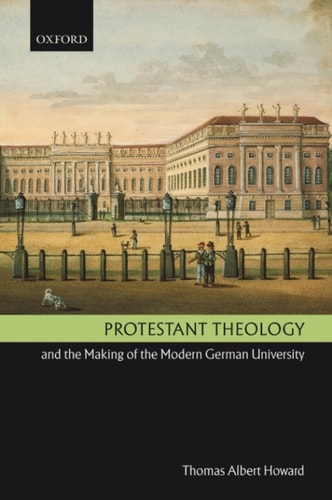
In shaping the modern academy and in setting the agenda of modern Christian theology, few institutions have been as influential as the German universities of the nineteenth century. This book examines the rise of the modern German university from the standpoint of the Protestant theological faculty, focusing especially on the University of Berlin (1810), Prussia's flagship university in the nineteenth century. In contradistinction to historians of modern higher education who often overlook theology, and to theologians who are frequently inattentive to the social and institutional contexts of religious thought, Thomas Albert Howard argues that modern university development and the trajectory of modern Protestant theology in Germany should be understood as interrelated phenomena.
Menrva's Summary
THE THESIS
This book investigates the symbiotic relationship between the development of the modern German university system and the evolution of Protestant theological thought during the nineteenth century. Thomas Albert Howard, a scholar of intellectual and religious history, utilizes archival records and institutional histories to challenge the separation of academic and theological narratives. He posits that the structural reforms of the Prussian university system were fundamentally shaped by the intellectual contributions and social status of the Protestant theological faculty.
THE SCOPE MAP
What You Will Find
- Historical analysis of the University of Berlin founded in 1810
- Examination of the institutional integration of theology within the modern research university
- Analysis of the interplay between Prussian state policy and religious academic discourse
Scope Limits
- The study focuses primarily on the Prussian context and does not provide a comprehensive survey of all German-speaking territories
- The text does not cover the post-World War I decline of theological faculties
THE AUTHORITY PERSPECTIVE
Historians and theologians frequently cite this work as a critical bridge between the history of higher education and the history of ideas. Experts highlight the text for its ability to synthesize institutional administrative history with complex theological developments.
Page Count:
960
Publication Date:
2006-02-23
Publisher:
Oxford University Press, USA
ISBN-10:
0191532940
ISBN-13:
9780191532948
History
Religion
Education
Academic History
Theology
German history
Protestantism
Community Tags
Similar Books