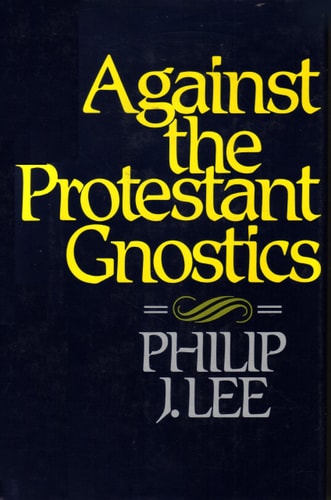
Against the Protestant Gnostics
0
0
As an Amazon Associate and affiliate partner, Menrva Books earns from qualifying purchases. Learn more
Author Description
Since the discovery of original gnostic documents at Nag Hammadi in 1945, many scholars have recognized a familiar presence within this ancient heresy. To some authors the main features of gnosticism--belief in a secret revelation available only to an initiated elite, rejection of the physical world, and escape into the self--seemed reminiscent of modern cult groups and secular movements. However, Philip Lee, noting that most of the early gnostics were firmly ensconced within the Church, locates modern gnosticism within the Protestant establishment itself. "As a Protestant, I believe I have identified the elusive modern gnostics and they are ourselves," he writes. In this penetrating and provocative assessment of the current state of religion and its effect on values in society at large, Lee criticizes conservatives and liberals alike as he traces gnostic motifs to the very roots of American Protestantism. With references to an extraordinary spectrum of writings from sources as diverse as John Calvin, Martin Buber, Tom Wolfe, Margaret Atwood and Emily Dickinson among many others, he probes the effects of gnostic thinking on issues ranging from politics to feminism, from ecology to parenthood. The ethical ramifications of such a gnostic turn have been negative and frightening, he maintains. The book points to positive ways of restoring health to endangered Protestant churches. Calling for the restoration of a dialectical faith and practice, Lee offers an agenda for reform, including a renewal of obedience to the scriptures and an affirmation of life and creation within the circle of the extended family.
Menrva's Summary
THE THESIS
Philip J. Lee investigates the provocative question of whether modern Protestantism has been fundamentally compromised by the resurgence of ancient Gnostic ideologies. Drawing upon his background as a theologian, Lee argues that the core tenets of Gnosticism—such as the rejection of the physical world and the elevation of the self—have permeated contemporary American Protestant thought. He examines a wide array of historical and literary sources to demonstrate how these motifs influence modern political, social, and familial values, ultimately calling for a return to a more traditional, dialectical faith.
THE SCOPE MAP
What You Will Find
- Historical analysis of Gnostic documents discovered at Nag Hammadi and their parallels in modern religious movements.
- A critical examination of both conservative and liberal Protestant theological trends.
- Interdisciplinary evidence drawn from diverse sources including John Calvin, Martin Buber, Tom Wolfe, Margaret Atwood, and Emily Dickinson.
- Proposed strategies for church reform, emphasizing scriptural obedience and the affirmation of the physical world.
THE AUTHORITY PERSPECTIVE
Scholars and theologians frequently cite this work as a challenging critique of modern religious identity that demands careful engagement with the history of heresy. Readers often note the intellectual density of the prose, which requires a solid grasp of both historical theology and contemporary cultural criticism to fully appreciate the author's arguments.
Page Count:
367
Publication Date:
1987-06-11
Publisher:
Oxford University Press
ISBN-10:
0195040678
ISBN-13:
9780195040678
Religion
Sociology of Religion
Christianity
Theology
Protestantism
Community Tags
Other Editions(4)
Similar Books






Reader Comments
Share Your Thoughts
No comments yet. Be the first to share your thoughts!