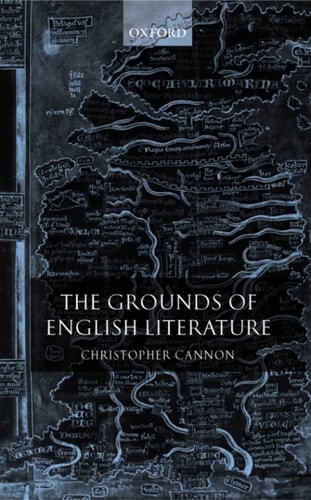
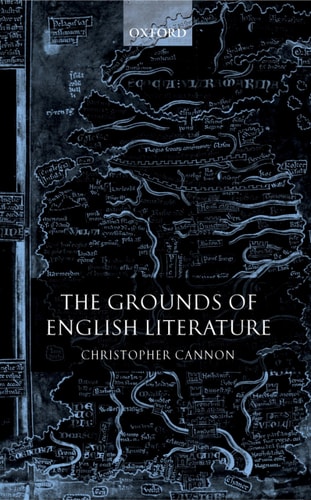
The Grounds of English Literature
0
0
As an Amazon Associate and affiliate partner, Menrva Books earns from qualifying purchases. Learn more
Author Description
The centuries just after the Norman Conquest are the forgotten period of English literary history. In fact, the years 1066-1300 witnessed an unparalleled ingenuity in the creation of written forms, for this was a time when almost every writer was unaware of the existence of other English writing. In a series of detailed readings of the more important early Middle English works, Cannon shows how the many and varied texts of the period laid the foundations for the project of English literature. This richness is for the first time given credit in these readings by means of an innovative theory of literary form that accepts every written shape as itself a unique contribution to the history of ideas. This theory also suggests that the impoverished understanding of literature we now commonly employ is itself a legacy of this early period, an attribute of the single form we have learned to call 'romance'. A number of reading methods have lately taught us to be more generous in our understandings of what literature might be, but this book shows us that the very variety we now strive to embrace anew actually formed the grounds of English literature-a richness we only lost when we forgot how to recognize it.
Menrva's Summary
THE THESIS
This book investigates the neglected literary output of the post-Conquest period to determine how these early texts established the fundamental structures of English literature. Christopher Cannon, a scholar of medieval literature, utilizes a series of close readings of early Middle English works to challenge the traditional narrative of literary development. He proposes an innovative theory of literary form that treats every written shape as a distinct contribution to the history of ideas, arguing that our modern, narrow definition of literature is a legacy of this era's focus on the 'romance' form.
THE SCOPE MAP
What You Will Find
- Analysis of English literary production between 1066 and 1300
- A theoretical framework for evaluating diverse written forms
- Detailed readings of significant early Middle English texts
Scope Limits
- The study does not focus on post-1300 literary developments
- The analysis excludes works written in Latin or French from this period
THE AUTHORITY PERSPECTIVE
Scholars and students of medieval literature frequently cite this work for its rigorous re-evaluation of the early Middle English canon. Experts highlight the text as a significant contribution to understanding how modern literary categories were historically constructed.
Page Count:
250
Publication Date:
2008-01-01
Publisher:
Oxford University Press
ISBN-10:
0191533750
ISBN-13:
9780191533754
History
Academic
Literary Criticism
English literature
English
English & College Success
Community Tags
Other Editions(3)

Similar Books