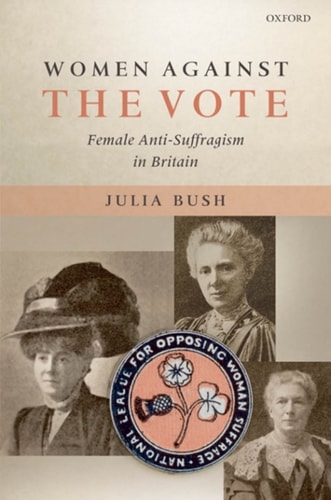
Women Against the Vote: Female Anti-Suffragism in Britain
0
0
As an Amazon Associate and affiliate partner, Menrva Books earns from qualifying purchases. Learn more
Author Description
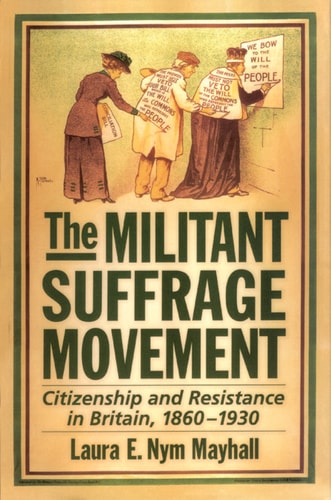
British women who resisted their own enfranchisement were ridiculed by the suffragists and have since been neglected by historians. Yet these women, together with the millions whose indifference reinforced the opposition case, claimed to form a majority of the female public on the eve of the First World War. By 1914 the organised 'antis' rivalled the suffragists in numbers, though not in terms of publicity-seeking activism. The National League for Opposing Woman Suffrage was dominated by the self-consciously masculine leadership of Lord Cromer and Lord Curzon, but also heavily dependent upon an impressive cadre of women leaders and a mostly female membership. Women Against the Vote looks at three overlapping groups of women: maternal reformers, women writers and imperialist ladies. These women are then followed into action as campaigners in their own right, as well as supporters of anti-suffrage men. Collaboration between the sexes was not always straightforward, even within a movement dedicated to separate and complementary gender roles. As the anti-suffrage women pursued their own varied social and political agendas, they demonstrated their affinity with the mainstream social conservatism of the British women's movement. The rediscovered history of female anti-suffragism provides new perspectives on the campaigns both for and against the vote. It also makes an important contribution to the wider history of women's social and political activism in late nineteenth century and early twentieth century Britain.
Menrva's Summary
THE THESIS
This work investigates the motivations and organizational influence of British women who actively opposed their own enfranchisement during the late nineteenth and early twentieth centuries. Julia Bush, a historian specializing in British women's political activism, utilizes archival records and organizational documents to challenge the historical narrative that anti-suffragism was exclusively a male-dominated endeavor. The text argues that female anti-suffragists were a significant, organized political force whose social conservatism and imperialist views shaped the broader landscape of the British women's movement prior to the First World War.
THE SCOPE MAP
What You Will Find
- Analysis of the National League for Opposing Woman Suffrage
- Profiles of three distinct groups: maternal reformers, women writers, and imperialist ladies
- Examination of the collaborative dynamics between male and female anti-suffrage leaders
- Contextualization of anti-suffrage activism within the broader British social conservative movement
Scope Limits
- The study focuses primarily on the British context and does not provide a comparative analysis of international anti-suffrage movements.
- The text does not focus on the internal mechanics of the pro-suffrage movement except as a point of contrast.
THE AUTHORITY PERSPECTIVE
Historians and scholars of gender studies recognize this text as a significant contribution to the historiography of the suffrage era, particularly for its focus on the neglected female perspective within the anti-suffrage movement. Readers frequently note the academic rigor of the research and the clarity with which the author navigates the complex social dynamics of the period.
Page Count:
300
Publication Date:
2007-01-01
Publisher:
Oxford University Press
ISBN-10:
0191530255
ISBN-13:
9780191530258
History
Political History
British History
Womens History
Great Britain
Social History
European History
Community Tags
Other Editions(2)

Similar Books