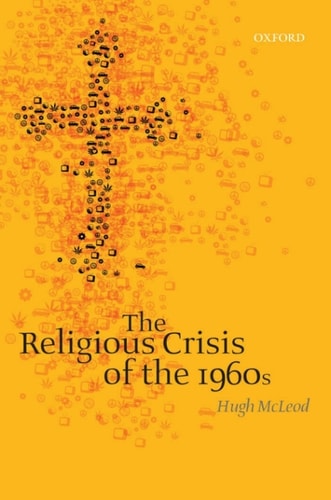
The Religious Crisis of the 1960s
0
0
As an Amazon Associate and affiliate partner, Menrva Books earns from qualifying purchases. Learn more
Author Description
The 1960s were a time of explosive religious change. In the Christian churches it was a time of innovation, from the 'new theology' and 'new morality' of Bishop Robinson to the evangelicalism of the Charismatic Movement, and of charismatic leaders, such as Pope John XXIII and Martin Luther King. But it was also a time of rapid social and cultural change when Christianity faced challenges from Eastern religions, from Marxism and feminism, and above all from new 'affluent' lifestyles. Hugh McLeod tells in detail, using oral history, how these movements and conflicts were experienced in England, but because the Sixties were an international phenomenon he also looks at other countries, especially the USA and France. McLeod explains what happened to religion in the 1960s, why it happened, and how the events of that decade shaped the rest of the 20th century.
Menrva's Summary
THE THESIS
This book investigates the rapid transformation of religious life during the 1960s and the subsequent impact of these shifts on the remainder of the 20th century. Hugh McLeod, a scholar of religious history, utilizes a combination of oral history and comparative analysis to examine how Christian institutions navigated the pressures of secularization, new social movements, and shifting cultural norms. The work argues that the religious volatility of the decade was not an isolated event but a foundational period that redefined the relationship between faith and modern affluent society.
THE SCOPE MAP
What You Will Find
- Analysis of the 'new theology' and the Charismatic Movement
- Comparative study of religious trends in England, the USA, and France
- Examination of external challenges from Marxism, feminism, and Eastern religions
- Integration of oral history accounts to capture individual experiences
Scope Limits
- The text focuses primarily on Christian denominations rather than an exhaustive global survey of all world religions
- The analysis is weighted toward Western contexts, specifically England, the USA, and France
THE AUTHORITY PERSPECTIVE
Scholars and historians frequently cite this work as a nuanced examination of the intersection between social change and religious decline. Experts highlight the author's effective use of oral history to ground broad sociological trends in personal experience.
Page Count:
300
Publication Date:
2008-01-01
Publisher:
Oxford University Press
ISBN-10:
0191538299
ISBN-13:
9780191538292
History
Religion
Sociology
Christianity
20th Century
Community Tags
Other Editions(3)
Similar Books