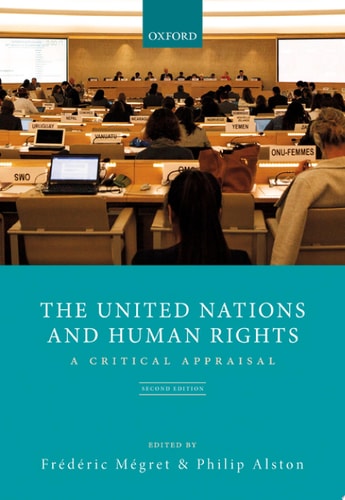
The United Nations and Human Rights
0
0
As an Amazon Associate and affiliate partner, Menrva Books earns from qualifying purchases. Learn more
Author Description
The Very Concept Of Human Rights Implies Governmental Accountability. To Ensure That Governments Are Indeed Held Accountable For Their Treatment Of Citizens And Others The United Nations Has Established A Wide Range Of Mechanisms To Monitor Compliance, And To Seek To Prevent As Well As Respond To Violations. The Panoply Of Implementation Measures That The Un Has Taken Since 1945 Has Resulted In A Diverse And Complex Set Of Institutional Arrangements, The Effectiveness Of Which Varies Widely. Indeed, There Is Much Doubt As To The Effectiveness Of Much Of The Un's Human Rights Efforts But Also About What Direction It Should Take. Inevitable Instances Of Politicization And The Hostile, Or At Best Ambivalent, Attitude Of Most Governments, Has At Times Endangered The Fragile Progress Made On The More Technical Fronts. At The Same Time, Technical Efforts Cannot Dispense With The Complex Politics Of Actualizing The Promise Of Human Rights At And Through The Un. In Addition To Significant Actual And Potential Problems Of Duplication, Overlapping And Inconsistent Approaches, There Are Major Problems Of Under-funding And Insufficient Expertise. The Complexity Of These Arrangements And The Difficulty In Evaluating Their Impact Makes A Comprehensive Guide Of The Type Provided Here All The More Indispensable. These Essays Critically Examine The Functions, Procedures, And Performance Of Each Of The Major Un Organs Dealing With Human Rights, Including The Security Council And The International Court Of Justice As Well As The More Specialized Bodies Monitoring The Implementation Of Human Rights Treaties. Significant Attention Is Devoted To The Considerable Efforts At Reforming The Un's Human Rights Machinery, As Illustrated Most Notably By The Creation Of The Human Rights Council To Replace The Commission On Human Rights. The Book Also Looks At The Relationship Between The Various Bodies And The Potential For Major Reforms And Restructuring.
Menrva's Summary
THE THESIS
This volume investigates the efficacy, structural complexity, and political challenges inherent in the United Nations' mechanisms for monitoring and enforcing human rights compliance. The authors, Frédéric Mégret and Philip Alston, compile a series of critical essays that analyze the institutional evolution of UN human rights bodies since 1945. By examining the interplay between technical procedures and the broader political landscape, the text evaluates how these organs navigate governmental resistance, funding constraints, and systemic overlap to fulfill their mandates.
THE SCOPE MAP
What You Will Find
- Detailed analysis of major UN organs including the Security Council and the International Court of Justice.
- Examination of specialized treaty-monitoring bodies and their procedural functions.
- Critical assessment of reform efforts, specifically the transition from the Commission on Human Rights to the Human Rights Council.
Scope Limits
- The text does not provide a prescriptive manual for individual human rights advocacy.
- It does not cover the entirety of non-UN international human rights law or regional human rights systems.
THE AUTHORITY PERSPECTIVE
Experts recognize this collection as a comprehensive reference for understanding the institutional architecture of the UN human rights system. Readers frequently note the academic density of the prose, which serves as a foundational resource for students and practitioners of international law.
Page Count:
800
Publication Date:
2020-01-01
Publisher:
Oup Oxford
ISBN-10:
0191544779
ISBN-13:
9780191544774
United Nations
Law
International relations
Human rights
Community Tags
Similar Books