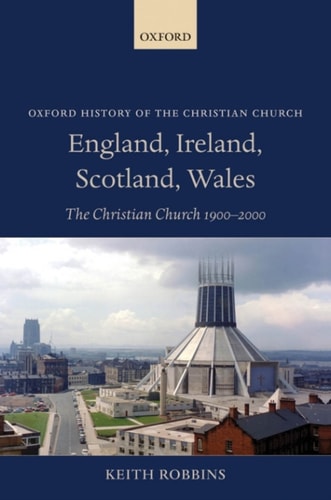
England, Ireland, Scotland, Wales: The Christian Church 1900-2000
0
0
As an Amazon Associate and affiliate partner, Menrva Books earns from qualifying purchases. Learn more
Author Description
Keith Robbins, building on his previous writing on the modern history of the interlocking but distinctive territories of the British Isles, takes a wide-ranging, innovative and challenging look at the twentieth-century history of the main bodies, at once national and universal, which have collectively constituted the Christian Church. The protracted search for elusive unity is emphasized. Particular beliefs, attitudes, policies and structures are located in their social and cultural contexts. Prominent individuals, clerical and lay, are scrutinized. Religion and politics intermingle, highlighting, for churches and states, fundamental questions of identity and allegiance, of public and private values, in a century of ideological conflict, violent confrontation (in Ireland), two world wars and protracted Cold War. The massive change experienced by the countries and people of the Isles since 1900 has encompassed shifting relationships between England, Ireland (and Northern Ireland), Scotland and Wales, the end of the British Empire, the emergence of a new Europe and, latterly, major immigration of adherents of Islam, Hinduism, Sikhism and other faiths from outside Europe: developments scarcely conceivable at the outset. Such a broad contextual perspective provides an essential background to understanding the puzzling ambiguities evident both in secularization and enduring Christian faith. Robbins provides a cogent and compelling overview of this turbulent century for the churches of the Isles.
Menrva's Summary
THE THESIS
This work investigates how the Christian Church in England, Ireland, Scotland, and Wales navigated the profound social, political, and ideological transformations of the twentieth century. Keith Robbins, a historian specializing in the modern British Isles, utilizes a comparative framework to analyze the institutional and cultural evolution of these churches. He examines how religious bodies responded to the decline of the British Empire, the impact of two world wars, and the shifting landscape of national identity in a century marked by secularization and religious pluralism.
THE SCOPE MAP
What You Will Find
- A comparative analysis of ecclesiastical developments across the four nations of the British Isles from 1900 to 2000.
- Examination of the intersection between religious policy and state politics during the Cold War and periods of violent conflict in Ireland.
- Analysis of the impact of immigration and the rise of non-Christian faiths on the traditional religious landscape.
Scope Limits
- The text focuses primarily on the institutional and public history of the main church bodies rather than an exhaustive theological survey of every minor denomination.
THE AUTHORITY PERSPECTIVE
Scholars and historians recognize this volume as a comprehensive and authoritative account of twentieth-century British ecclesiastical history. Readers frequently note the academic density of the prose and the author's success in balancing national distinctions with broader regional trends.
Page Count:
544
Publication Date:
2008-01-01
Publisher:
OUP Oxford
ISBN-10:
0191544183
ISBN-13:
9780191544187
Religion
History
Christianity
Church History
European History
British History
Community Tags
Similar Books