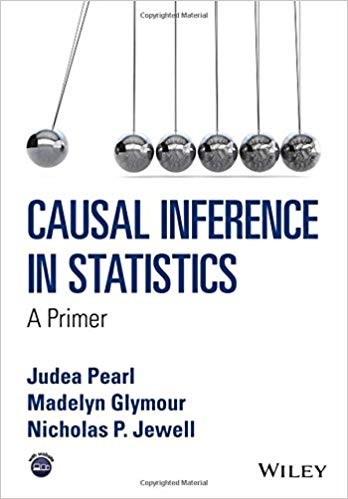
Causal Inference in Statistics
0
0
As an Amazon Associate and affiliate partner, Menrva Books earns from qualifying purchases. Learn more
Author Description
Causality is central to the understanding and use of data. Without an understanding of cause effect relationships, we cannot use data to answer questions as basic as, “Does this treatment harm or help patients?” But though hundreds of introductory texts are available on statistical methods of data analysis, until now, no beginner-level book has been written about the exploding arsenal of methods that can tease causal information from data. Causal Inference in Statistics fills that gap. Using simple examples and plain language, the book lays out how to define causal parameters; the assumptions necessary to estimate causal parameters in a variety of situations; how to express those assumptions mathematically; whether those assumptions have testable implications; how to predict the effects of interventions; and how to reason counterfactually. These are the foundational tools that any student of statistics needs to acquire in order to use statistical methods to answer causal questions of interest. This book is accessible to anyone with an interest in interpreting data, from undergraduates, professors, researchers, or to the interested layperson. Examples are drawn from a wide variety of fields, including medicine, public policy, and law; a brief introduction to probability and statistics is provided for the uninitiated; and each chapter comes with study questions to reinforce the readers understanding.
Menrva's Summary
THE THESIS
This book introduces the fundamental concepts and methods of causal inference for statistical analysis. It aims to bridge the gap in introductory texts by providing a beginner-level guide to understanding cause-effect relationships from data. The book explains how to define causal parameters, the necessary assumptions for their estimation, and how to express these assumptions mathematically. It also covers how to predict the effects of interventions and reason counterfactually, equipping readers with essential tools for answering causal questions using statistical methods.
THE SCOPE MAP
- Methods for defining causal parameters in statistical models.
- Explanation of assumptions required for estimating causal parameters.
- Techniques for expressing causal assumptions mathematically.
- Guidance on determining testable implications of causal assumptions.
- Framework for predicting the effects of interventions.
- Introduction to counterfactual reasoning in statistical contexts.
- Examples drawn from medicine, public policy, and law.
THE AUTHORITY PERSPECTIVE
The book is designed to be accessible to a broad audience, including undergraduates, professors, researchers, and interested laypersons, with a brief introduction to probability and statistics provided for those new to the field. Examples are drawn from diverse areas such as medicine, public policy, and law, and each chapter includes study questions to aid comprehension. The book aims to equip readers with the foundational tools needed to interpret data and answer causal questions.
Page Count:
156
Publication Date:
2016-01-01
ISBN-10:
1119186846
ISBN-13:
9781119186847
Non-Fiction
Science
Data Analysis
Causality
Statistics
Research Methods
Community Tags
Similar Books