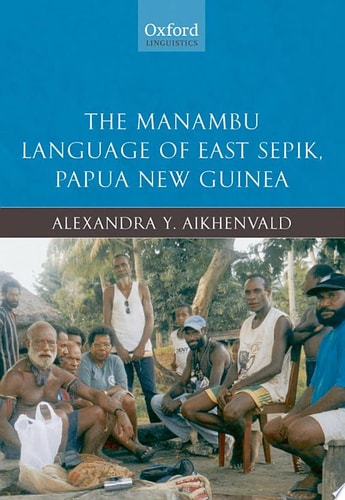
Manambu Language of East Sepik, Papua New Guinea
0
0
As an Amazon Associate and affiliate partner, Menrva Books earns from qualifying purchases. Learn more
Author Description
This Book Is The First Comprehensive Description Of The Manambu Language Of Papua New Guinea And Is Based Entirely On The Author's Immersion Fieldwork. Manambu Belongs To The Ndu Language Family, And Is Spoken By About 2,500 People In Five Villages: Avatip, Yawabak, Malu, Apa:n, And Yambon (yuanab) In East Sepik Province, Ambunti District. Manambu Can Be Considered An Endangered Language. The Manambu Language Has Many Unusual Properties. Every Noun Is Considered Masculine Or Feminine. Feminine Gender - Which Is Unmarked - Is Associated With Small Size And Round Shape, And Masculine Gender With Elongated Shape, Large Size, And Importance. The Manambu Culture Is Centered On Ownership Of Personal Names, And Is Similar To That Of The Iatmul, Described By Gregory Bateson. After An Introductory Account Of The Language And Its Speakers, Professor Aikhenvald Devotes Chapters To Phonology, Grammatical Relations, Word Classes, Gender, Semantics, Number, Case, Possession, Derivation And Compounding, Pronouns, Morphohology, Verbs, Mood And Modality, Negation, Clause Structure, Pragmatics, Discourse, Semantics, The Lexicon, Current Directions Of Change, And Genetic Relationship To Other Languages. The Description Is Presented In A Clear Style In A Framework That Will Be Comprehensible To All Linguists And Linguistically Oriented Anthropologists.
Menrva's Summary
THE THESIS
This volume provides a comprehensive grammatical description of the Manambu language, an endangered Ndu language spoken in the East Sepik Province of Papua New Guinea. Alexandra Aikhenvald, a prominent linguist, utilizes extensive immersion fieldwork to document the structural properties of this language. The work argues that Manambu possesses unique linguistic features, particularly regarding its gender system and cultural integration, which warrant detailed academic preservation.
THE SCOPE MAP
What You Will Find
- Detailed analysis of phonology, morphology, and syntax
- Examination of the gender system based on size and shape
- Discussion of cultural context, including naming conventions
- Comparative analysis of genetic relationships to other Ndu languages
Scope Limits
- Does not provide a complete dictionary or exhaustive lexicon
- Does not focus on pedagogical instruction for language learners
THE AUTHORITY PERSPECTIVE
Linguists and anthropologists recognize this text as a foundational reference for the study of the Ndu language family. Experts frequently highlight the clarity of the author's descriptive framework, making it accessible to both specialists and those interested in linguistic typology.
Page Count:
736
Publication Date:
2008-01-01
Publisher:
Ebsco Publishing
ISBN-10:
0191561665
ISBN-13:
9780191561665
Linguistics
New Guinea
Anthropology
Grammar
Community Tags
Similar Books