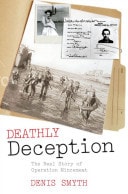
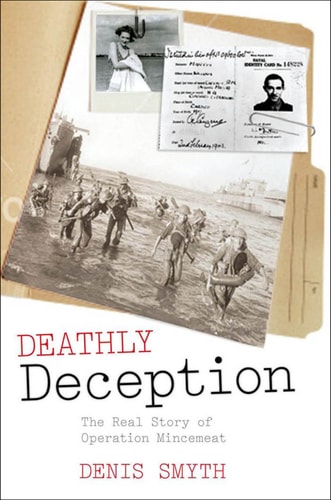
Deathly Deception: The Real Story of Operation Mincemeat
0
0
As an Amazon Associate and affiliate partner, Menrva Books earns from qualifying purchases. Learn more
Author Description
Deathly Deception Tells The True Story Of The Classic World War Two Intelligence Plan To Pass Misleading Strategic Information To Hitler And His Generals That Was Immortalized In The 1956 Hollywood Film The Man Who Never Was. Drawing On A Wealth Of Recently Available Documentation, Denis Smyth Shows How British Deceptioneers Solved A Multitude Of Medical, Technical, And Logistical Problems To Implement Their Deceptive Design. The Aim Of Their Covert Plan Was To Persuade The German High Command That The Allies Were Going To Attack Greece, Rather Than Sicily In The Summer Of 1943. To Achieve This, They Equipped A Dead Body With A New Military Identity As A Royal Marine Major, A New Private Personality As The Fiancé Of An Attractive Young Woman Named 'pam', And A Government Briefcase Containing Deceptive Documents. They Then Planted The Corpse In South-western Spanish Coastal Waters Via A Stealthy Submarine Operation, And Carefully Monitored (through Their Codebreakers And Spies) How The Nazi Intelligence Services And Their Warlords Proceeded To 'swallow Mincemeat Whole'. The Result Was A Stunning Success. The German Mis-deployment Of Their Forces To Meet The Notional Anglo-american Threat To Greece Materially Contributed To The Allied Victory In Sicily - Which, In Its Turn, Drove Mussolini From Power In Italy And Inflicted Irreparable Damage On The German War Effort.
Menrva's Summary
THE THESIS
This book investigates the operational mechanics and strategic impact of Operation Mincemeat, the British intelligence deception plan designed to mislead the German High Command during World War II. Denis Smyth, a historian specializing in international relations and military strategy, utilizes recently declassified documentation to reconstruct the logistical and technical hurdles faced by British intelligence officers. The work argues that the success of this operation was not merely a stroke of luck, but the result of meticulous planning and a sophisticated understanding of Nazi intelligence vulnerabilities.
THE SCOPE MAP
What You Will Find
- Detailed analysis of the logistical and medical preparation of the decoy corpse.
- Examination of the coordination between British codebreakers and field agents.
- Assessment of the German intelligence response and the subsequent mis-deployment of Axis forces.
Scope Limits
- The text does not provide a comprehensive history of the entire Sicilian campaign.
- It does not focus on the personal biographies of the individuals involved beyond their functional roles in the operation.
THE AUTHORITY PERSPECTIVE
Historians and military scholars frequently cite this work for its rigorous use of primary source documentation and its clear explanation of complex intelligence maneuvers. Readers often note that the prose is accessible while maintaining a high level of academic detail regarding the strategic landscape of 1943.
Page Count:
400
Publication Date:
2010-01-01
Publisher:
Oup Oxford
ISBN-10:
0191576174
ISBN-13:
9780191576171
History
Espionage
Military History
World War
Community Tags
Other Editions(4)

Similar Books













Reader Comments
Share Your Thoughts
No comments yet. Be the first to share your thoughts!