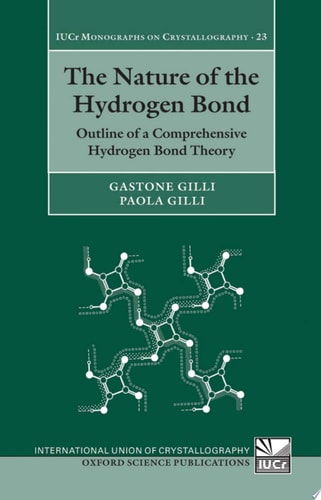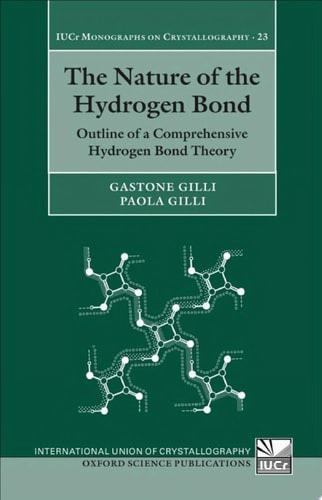
The Nature of the Hydrogen Bond: Outline of a Comprehensive Hydrogen Bond Theory
0
0
As an Amazon Associate and affiliate partner, Menrva Books earns from qualifying purchases. Learn more
Author Description
Hydrogen bond (H-bond) effects are known: it makes sea water liquid, joins cellulose microfibrils in trees, shapes DNA into genes and polypeptide chains into wool, hair, muscles or enzymes. Its true nature is less known and we may still wonder why O-H...O bond energies range from less than 1 to more than 30 kcal/mol without apparent reason. This H-bond puzzle is re-examined here from its very beginning and presented as an inclusive compilation of experimental H-bond energies and geometries. New concepts emerge from this analysis: new classes of systematically strong H-bonds (CAHBs and RAHBs: charge- and resonance-assisted H-bonds); full H-bond classification in six classes (the six chemical leitmotifs); and assessment of the covalent nature of strong H-bonds. This leads to three distinct but inter-consistent models able to rationalize the H-bond and predict its strength, based on classical VB theory, matching of donor-acceptor acid-base parameters (PA or pKa), or shape of the H-bond proton-transfer pathway. Applications survey a number of systems where strong H-bonds play an important functional role, namely drug-receptor binding, enzymatic catalysis, ion-transport through cell membranes, crystal design and molecular mechanisms of functional materials.
Menrva's Summary
THE THESIS
This text investigates the fundamental nature of the hydrogen bond to resolve long-standing inconsistencies in bond energy and geometry. Authors Gastone Gilli and Paola Gilli, both established experts in crystallography and structural chemistry, synthesize experimental data to propose a comprehensive theoretical framework. They argue that the variability in hydrogen bond strength can be rationalized through a systematic classification system and the application of valence bond theory, acid-base parameters, and proton-transfer pathway analysis.
THE SCOPE MAP
What You Will Find
- A comprehensive compilation of experimental hydrogen bond energies and geometries.
- The introduction of Charge-Assisted Hydrogen Bonds (CAHBs) and Resonance-Assisted Hydrogen Bonds (RAHBs).
- A six-class classification system for hydrogen bonds based on chemical leitmotifs.
- Applications in drug-receptor binding, enzymatic catalysis, and crystal design.
Scope Limits
- The text focuses primarily on structural and theoretical chemical perspectives rather than purely biological or industrial engineering applications.
- It assumes a high level of prior knowledge in physical chemistry and quantum mechanical concepts.
THE AUTHORITY PERSPECTIVE
Experts in the field of crystallography and structural chemistry recognize this work as a rigorous, foundational text for understanding the nuances of intermolecular forces. Readers frequently note the academic density of the prose, which is intended for advanced researchers and graduate-level students in the chemical sciences.
Page Count:
336
Publication Date:
2009-01-01
Publisher:
OUP Oxford
ISBN-10:
0191580279
ISBN-13:
9780191580277
Science
Chemistry
Physical Chemistry
Biochemistry
Earth Sciences