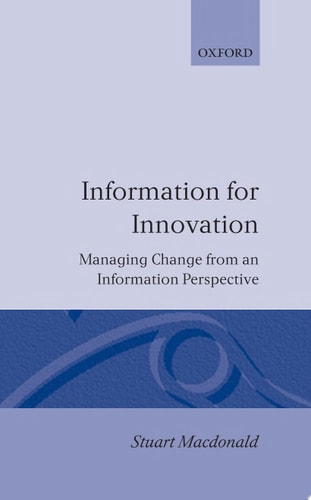
Information For Innovation
0
0
As an Amazon Associate and affiliate partner, Menrva Books earns from qualifying purchases. Learn more
Author Description
Information Is Not Taken Seriously. Much Is Said About The Information Age, The Information Economy, The Information Society, And Particularly About Information Technology, But Little About Information Itself. If These Are Important, Then So Is Information. But Information Is Not As Other Goods: It Has Some Peculiar Characteristics. It Cannot Be Displayed For Sale Without Giving It Away In The Process. Sold, It Goes To The Buyer But Still Remains With The Seller. Buying Entails Expressing Demand In Ignorance For Buyers Who Do Not Know Just What It Is That They Do Not Know. Such Characteristics Have Long Been Recognised By Economists, But It Is Not Generally Economists Who Have Most To Say About The Importance Of Information. This Privilege Is Exercised By Senior Managers, Who Speak Passionately About Knowledge-based, Learning Organizations; By Politicians And Public Servants, Anxious To Compensate With Policy And Programme For The Information Failure Of Organization And Market; And By Specialists In Telecommunications And Information Technology, Bent On Adding Value To What They Treat As Just A Commodity. All Are Particularly Enthusiastic About The Innovation Which Springs From Information. Information Usually Requires New Information. Finding, Acquiring, And Mixing This New Information With That Already In Use Presents Problems, Not Least Because Complex Information Transactions Are Required Rather Than Simple Information Transfer. Solutions Can Be Devised, But Only By Accommodating The Characteristics Of Information. This Book Contrasts The Way Innovation Is Normally Regarded In A Variety Of Areas From Eighteenth-century Agriculture To High Technology, From Technology Transfer To Industrial Espionage, From Corporate Strategy To Patents And Independent Inventors With How It Appears From What Is Termed An 'information Perspective', That Is One That Puts Information First. The Results Are Intriguing, Suggesting That Radically Different Approaches To Innovation (and O
Menrva's Summary
THE THESIS
This book investigates the fundamental nature of information as a unique economic good and its critical, often misunderstood role in driving innovation. Stuart Macdonald, an expert in the economics of innovation, challenges the prevailing tendency to treat information as a standard commodity. By applying an 'information perspective,' he argues that the peculiar characteristics of information—such as the inability to sell it without revealing it—require a complete rethinking of how organizations and markets manage innovation processes.
THE SCOPE MAP
What You Will Find
- An analysis of information transactions versus simple information transfer.
- Comparative studies of innovation across diverse sectors, including agriculture, high technology, and industrial espionage.
- Examination of corporate strategy, patent systems, and the role of independent inventors.
Scope Limits
- The text does not provide a technical manual for IT infrastructure or telecommunications hardware.
- It does not offer a prescriptive 'how-to' guide for corporate management but rather a theoretical framework for understanding information dynamics.
THE AUTHORITY PERSPECTIVE
Experts recognize this work as a significant contribution to the economics of knowledge and innovation studies. Readers frequently note the academic density of the prose, which provides a rigorous challenge to conventional business literature regarding the information economy.
Page Count:
306
Publication Date:
1998-01-01
Publisher:
Oup Oxford
ISBN-10:
0191584150
ISBN-13:
9780191584152
Business
Economics
Management
Innovation
Information Theory
Community Tags
Similar Books