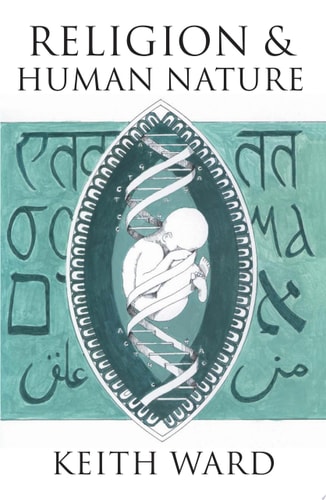
Religion and Human Nature
0
0
As an Amazon Associate and affiliate partner, Menrva Books earns from qualifying purchases. Learn more
Author Description
Continuing Keith Ward's Series On Comparative Religion, This Book Deals With Religious Views Of Human Nature And Destiny. The Beliefs Of Six Major Traditions Are Presented: The View Of Advaita Vedanta That There Is One Supreme Self, Unfolding Into The Illusion Of Individual Existence; The Vaishnava Belief That There Is An Infinite Number Of Souls, Whose Destiny Is To Be Released From Material Embodiment; The Buddhist View That There Is No Eternal Self; The Abrahamic Belief That Persons Are Essentially Embodied Souls; And The Materialistic Position That Persons Are Complex Material Organisms. Indian Ideas Of Rebirth, Karma, And Liberation From Samsara Are Critically Analysed And Compared With Semitic Belief In The Intermediate State Of Sheol, Purgatory Or Paradise, The Final Judgement And The Resurrection Of The Body. The Impact Of Scientific Theories Of Cosmic And Biological Evolution On Religious Beliefs Is Assessed, And A Form Of 'soft Emergent Materialism' Is Defended, With Regard To The Soul. In This Context, A Christian Doctrine Of Original Sin And Atonement Is Presented, Stressing The Idea Of Soterial, As Opposed To Forensic, Justice. Finally, A Christian View Of Personal Immortality And The 'end Of All Things' Is Developed In Conversation With Jewish And Muslim Beliefs About Judgement And Resurrection.
Menrva's Summary
THE THESIS
This book investigates how diverse religious and secular traditions define the nature, purpose, and ultimate destiny of human beings. Keith Ward, a prominent philosopher and theologian, utilizes a comparative framework to evaluate how six major worldviews—ranging from Advaita Vedanta to modern materialism—conceptualize the soul, personal identity, and the afterlife. By synthesizing these disparate perspectives, Ward constructs a contemporary argument for a form of 'soft emergent materialism' that attempts to reconcile traditional Christian doctrines with scientific understandings of evolution.
THE SCOPE MAP
What You Will Find
- Comparative analysis of Advaita Vedanta, Vaishnava, Buddhist, Jewish, Muslim, and Christian views on the self.
- Critical examination of concepts such as rebirth, karma, samsara, purgatory, and resurrection.
- Integration of scientific theories regarding cosmic and biological evolution into theological discourse.
Scope Limits
- The text focuses primarily on the intersection of these specific traditions and does not provide an exhaustive survey of all global religious practices.
- The analysis is framed through the author's specific theological lens, rather than providing a purely secular anthropological study.
THE AUTHORITY PERSPECTIVE
Scholars and students of comparative religion frequently cite this work for its rigorous, systematic approach to complex metaphysical questions. Readers often note the academic density of the prose, which is intended for those already familiar with the foundational tenets of the religious traditions discussed.
Page Count:
343
Publication Date:
1999-01-28
Publisher:
Oxford University Press
ISBN-10:
019158827X
ISBN-13:
9780191588273
Religion
Philosophy
Theology
Metaphysics
Human Nature
Community Tags
Other Editions(3)

Similar Books