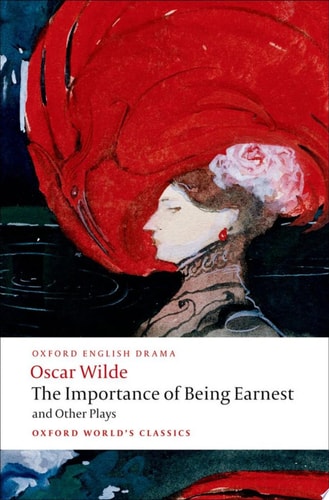
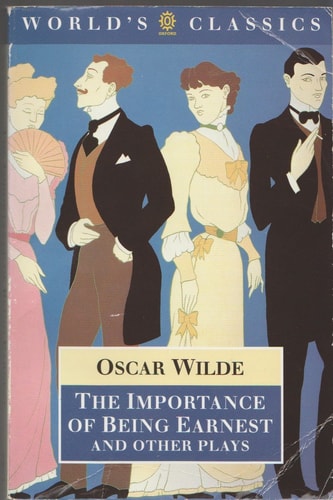
The Importance of Being Earnest and Other Plays
0
0
As an Amazon Associate and affiliate partner, Menrva Books earns from qualifying purchases. Learn more
Author Description
Oscar Wilde Was Already One Of The Best Known Literary Figures In Britain When He Was Persuaded To Turn His Extraordinary Talents To The Theatre. Between 1891 And 1895 He Produced A Sequence Of Distinctive Plays Which Spearheaded The Dramatic Renaissance Of The 1890s And Retain Their Power Today. The Social Comedies, Lady Windermere's Fan, A Woman Of No Importance, And An Ideal Husband, Offer A Moving As Well As Witty Dissection Of Society And Its Morals, With A Sharp Focus On Sexual Politics. By Contrast, The Experimental, Symbolist Salome, Written Originally In French, Was Banned For Public Performance By The English Censor. His Final Dramatic Triumph Was His `trivial' Comedy For Serious People, The Importance Of Being Earnest' Arguably The Greatest Farcical Comedy In English. Under The General Editorship Of Dr Michael Cordner Of The University Of York, The Texts Of The Plays Have Been Newly Edited And Are Presented With Modernized Spelling And Punctuation. In Addition, There Is A Scholarly Introduction And Detailed Annotation. About The Series: For Over 100 Years Oxford World's Classics Has Made Available The Widest Range Of Literature From Around The Globe. Each Affordable Volume Reflects Oxford's Commitment To Scholarship, Providing The Most Accurate Text Plus A Wealth Of Other Valuable Features, Including Expert Introductions By Leading Authorities, Helpful Notes To Clarify The Text, Up-to-date Bibliographies For Further Study, And Much More.
Menrva's Summary
THE PULSE
The central conflict arises from the tension between rigid Victorian social expectations and the characters' desperate, often absurd, attempts to maintain their reputations while pursuing personal desires. Oscar Wilde’s protagonists navigate a world defined by strict moral codes, class hierarchies, and the necessity of maintaining a respectable facade. They employ elaborate deceptions, mistaken identities, and biting wit to circumvent societal constraints. The narrative framework utilizes the structure of the stage play, relying on dialogue-driven exposition and dramatic irony to expose the hypocrisy inherent in late 19th-century British high society.
INSIDE THE PAGES
- Use of epigrammatic wit to subvert conventional wisdom
- Exploration of the duality between public persona and private reality
- Satirical critique of Victorian sexual politics and class morality
- Integration of farce and high-stakes social maneuvering
- Symbolist elements present in experimental works like Salome
- Focus on the artifice of language and social performance
- Complex character dynamics centered on reputation and scandal
- Structured dramatic arcs that build toward ironic resolutions
THE COLLECTIVE ECHO
Discussion often centers on Wilde's unparalleled ability to balance superficial comedy with profound social commentary. Readers frequently highlight the sharpness of his dialogue, noting that the plays remain relevant due to their focus on human vanity and social hypocrisy. Critics often examine the contrast between his lighthearted social comedies and the darker, more experimental tone found in his symbolist works. The enduring appeal of these plays is attributed to their rhythmic pacing and the clever subversion of traditional dramatic tropes. Many readers appreciate the inclusion of scholarly annotations, which provide necessary context for the specific cultural references of the 1890s.
Page Count:
400
Publication Date:
2008-01-01
Publisher:
Oup Oxford
ISBN-10:
0191593370
ISBN-13:
9780191593376
Drama
Fiction
Psychology
Satire
Comedy of Manners
Classic Literature
Victorian
Plays
Community Tags
Other Editions(5)
Similar Books



Reader Comments
Share Your Thoughts
No comments yet. Be the first to share your thoughts!