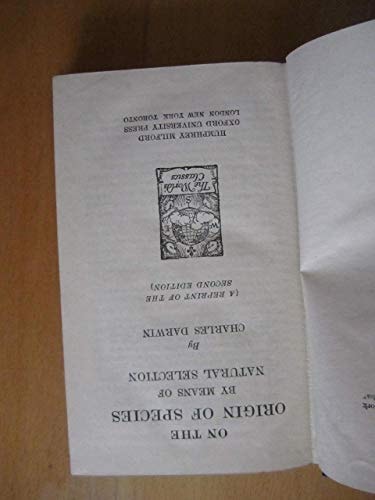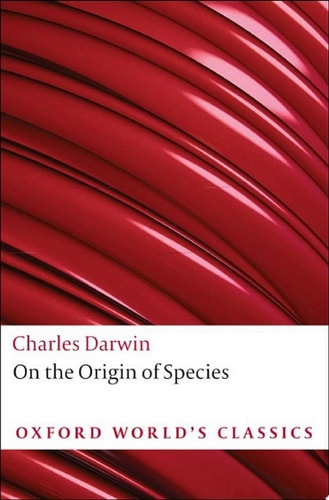
On the Origin of Species
0
0
As an Amazon Associate and affiliate partner, Menrva Books earns from qualifying purchases. Learn more
Author Description
'can we doubt... that individuals having any advantage, however slight, over others, would have the best chance of surviving and of procreating their kind?' In the Origin of Species (1859) Darwin challenged many of the most deeply held beliefs of the Western world. His insistence on the immense length of the past and on the abundance of life-forms, present and extinct, dislodged man from his central position in creation and called into question the role of the Creator. He showed that new species are achieved by natural selection, and that absence of plan is an inherent part of the evolutionary process. Darwin's prodigious reading, experimentation, and observations on his travels fed into his great work, which draws on material from the Galapagos Islands to rural Staffordshire, from English back gardens to colonial encounters. The present edition provides a detailed and accessible discussion of his theories and adds an account of the immediate responses to the book on publication. The resistances as well as the enthusiasms of the first readers cast light on recent controversies, particularly concerning questions of design and descent. ABOUT THE SERIES: For over 100 years Oxford World's Classics has made available the widest range of literature from around the globe. Each affordable volume reflects Oxford's commitment to scholarship, providing the most accurate text plus a wealth of other valuable features, including expert introductions by leading authorities, helpful notes to clarify the text, up-to-date bibliographies for further study, and much more.
Menrva's Summary
THE THESIS
How do species originate and diversify through the mechanism of natural selection? Charles Darwin, a naturalist whose observations during the HMS Beagle voyage informed his work, presents a comprehensive argument for the theory of evolution. He utilizes extensive empirical evidence from geology, biogeography, and animal husbandry to demonstrate that life forms change over time through the survival of advantageous traits. This text serves as the foundational document for modern evolutionary biology, systematically challenging the prevailing static view of biological creation.
THE SCOPE MAP
What You Will Find
- The theory of natural selection and descent with modification
- Comparative analysis of domestic breeding versus wild variation
- Evidence from the fossil record and geographical distribution of species
Scope Limits
- The text does not include the later discovery of genetic inheritance mechanisms
- It does not address the molecular biological basis of DNA mutation
THE AUTHORITY PERSPECTIVE
Experts recognize this as the seminal text in the history of biological science, noting its profound impact on both scientific thought and cultural philosophy. Readers frequently observe that while the prose is accessible, the density of 19th-century scientific observation requires careful study to fully grasp the nuances of Darwin's arguments.
Page Count:
432
Publication Date:
2008-01-01
Publisher:
OUP Oxford
ISBN-10:
0191607673
ISBN-13:
9780191607677
Science
Non-Fiction
Natural History
Philosophy of
Biology
Evolutionary Biology
Evolution
Community Tags
Similar Books