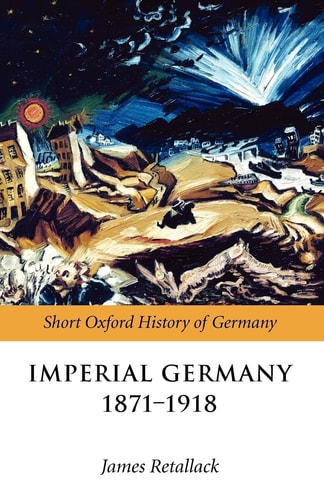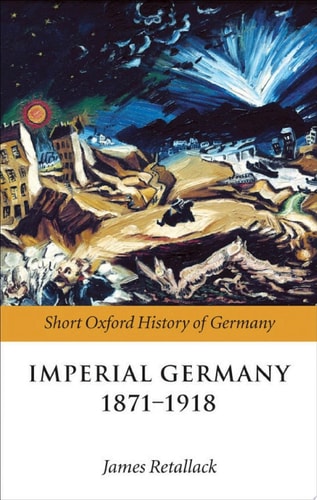
Imperial Germany 1871-1918
0
0
As an Amazon Associate and affiliate partner, Menrva Books earns from qualifying purchases. Learn more
Author Description
The German Empire was founded in January 1871 not only on the basis of Chancellor Otto von Bismarck's 'blood and iron' policy but also with the support of liberal nationalists. Under Bismarck and Kaiser Wilhelm II, Germany became the dynamo of Europe. Its economic and military power were pre-eminent; its science and technology, education, and municipal administration were the envy of the world; and its avant-garde artists reflected the ferment in European culture. But Germany also played a decisive role in tipping Europe's fragile balance of power over the brink and into the cataclysm of the First World War, eventually leading to the empire's collapse in military defeat and revolution in November 1918. With contributions from an international team of twelve experts in the field, this volume offers an ideal introduction to this crucial era, taking care to situate Imperial Germany in the larger sweep of modern German history, without suggesting that Nazism or the Holocaust were inevitable endpoints to the developments charted here.
Menrva's Summary
THE THESIS
This volume investigates the political, social, and cultural trajectory of the German Empire from its unification in 1871 to its collapse in 1918. Edited by James N. Retallack and featuring contributions from twelve international experts, the text provides a comprehensive analysis of the factors that propelled Germany to European pre-eminence while simultaneously examining the systemic tensions that contributed to the outbreak of the First World War. The authors utilize a balanced historical framework that avoids teleological interpretations, specifically rejecting the notion that the collapse of the empire made the subsequent rise of National Socialism inevitable.
THE SCOPE MAP
What You Will Find
- Analysis of the Bismarckian and Wilhelmine eras
- Examination of German economic, military, and technological development
- Discussion of cultural and artistic movements within the empire
- Contextualization of Germany's role in European power dynamics
Scope Limits
- Does not provide an exhaustive military history of specific battles
- Does not attempt to link the imperial era directly to the Holocaust as a predetermined outcome
THE AUTHORITY PERSPECTIVE
Scholars and students frequently cite this volume as a reliable and accessible entry point for understanding the complexities of the German Empire. Experts highlight the collaborative nature of the work, noting that it successfully synthesizes diverse historical perspectives into a cohesive narrative.
Page Count:
333
Publication Date:
2008-01-01
Publisher:
OUP Oxford
ISBN-10:
019160710X
ISBN-13:
9780191607103
History
European History
Academic
Military History
German history
Political History