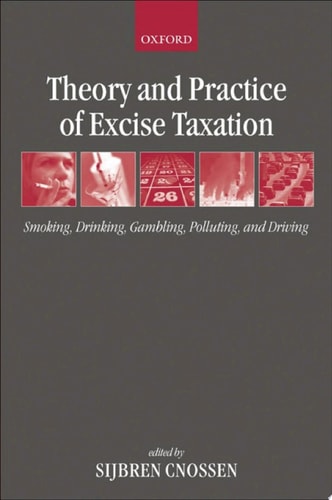
Theory and Practice of Excise Taxation: Smoking, Drinking, Gambling, Polluting, and Driving
0
0
As an Amazon Associate and affiliate partner, Menrva Books earns from qualifying purchases. Learn more
Author Description
Excise taxes on smoking, drinking, gambling, polluting, and driving are always topical and controversial. Not only are these taxes convenient sources of government revenue, they can also be designed to reflect the external costs that consumers or producers of excisable products impose on other people. Global warming, acid rain, traffic congestion, and the economic costs of cigarette and alcohol consumption are problems that can be corrected through selective excise taxes and other regulatory instruments. Excise taxes, moreover, are increasingly looked upon as revenue substitutes for distortionary taxes on capital and labour. Addressing these and other issues, this book by internationally recognized experts analyses the art of excise taxation, providing a systematic, insightful, and often provocative treatment of a major fiscal instrument that policy-makers often neglect, and that gets little attention in the professional literature. It provides a sound understanding, not only of relevant economic theory, but of the myriad institutional details that are crucial for the practical application of that theory.
Menrva's Summary
THE THESIS
This book investigates how excise taxes can be effectively utilized as both a revenue source and a regulatory instrument to address negative externalities associated with specific consumer behaviors. Sijbren Cnossen, a noted authority in public finance, synthesizes economic theory with institutional practice to evaluate the role of selective taxes. The text argues that excise taxes serve as a corrective mechanism for social costs such as pollution, congestion, and health impacts, while also functioning as a viable alternative to more distortionary forms of taxation on labor and capital.
THE SCOPE MAP
What You Will Find
- Economic analysis of taxes on tobacco, alcohol, gambling, environmental pollutants, and motor fuels.
- Frameworks for designing excise tax structures that account for external costs.
- Comparative analysis of international tax policies and institutional implementation strategies.
Scope Limits
- The text does not provide a comprehensive guide to general income tax reform or corporate tax law.
- It focuses primarily on selective excise instruments rather than broad-based consumption taxes like VAT.
THE AUTHORITY PERSPECTIVE
Experts recognize this work as a definitive resource for understanding the intersection of fiscal policy and behavioral regulation. Readers frequently note the academic density of the prose, which makes it a primary reference for policy-makers and graduate-level students in economics.
Page Count:
264
Publication Date:
2005-01-01
Publisher:
OUP Oxford
ISBN-10:
0191608556
ISBN-13:
9780191608551
Economics
Public Finance
Excise tax
Taxation
Internal revenue
Public Policy
Community Tags
Other Editions(2)

Similar Books