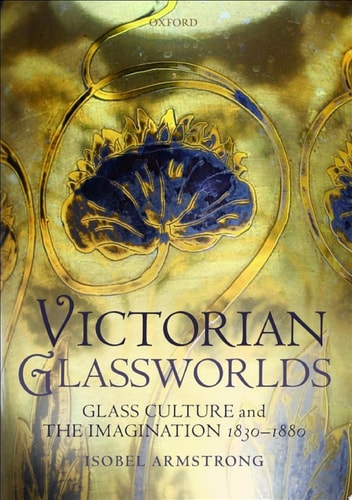
Victorian Glassworlds: Glass Culture and the Imagination 1830-1880
0
0
As an Amazon Associate and affiliate partner, Menrva Books earns from qualifying purchases. Learn more
Author Description
Isobel Armstrong's startlingly original and beautifully illustrated book tells the stories that spring from the mass-production of glass in nineteenth-century England. Moving across technology, industry, local history, architecture, literature, print culture, the visual arts, optics, and philosophy, it will transform our understanding of the Victorian period. The mass production of glass in the nineteenth century transformed an ancient material into a modern one, at the same time transforming the environment and the nineteenth-century imagination. It created a new glass culture hitherto inconceivable. Glass culture constituted Victorian modernity. It was made from infinite variations of the prefabricated glass panel, and the lens. The mirror and the window became its formative elements, both the texts and constituents of glass culture. The glassworlds of the century are heterogeneous. They manifest themselves in the technologies of the factory furnace, in the myths of Cinderella and her glass slipper circulated in print media, in the ideologies of the conservatory as building type, in the fantasia of the shopfront, in the production of chandeliers, in the Crystal Palace, and the lens-made images of the magic lantern and microscope. But they were nevertheless governed by two inescapable conditions. First, to look through glass was to look through the residues of the breath of an unknown artisan, because glass was mass produced by incorporating glassblowing into the division of labour. Second, literally a new medium, glass brought the ambiguity of transparency and the problems of mediation into the everyday. It intervened between seer and seen, incorporating a modern philosophical problem into bodily experience. Thus for poets and novelists glass took on material and ontological, political, and aesthetic meanings. Reading glass forwards into Bauhaus modernism, Walter Benjamin overlooked an early phase of glass culture where the languages of glass are different.
Menrva's Summary
THE THESIS
This book investigates how the mass production of glass in nineteenth-century England fundamentally reshaped the Victorian environment and the collective imagination. Isobel Armstrong, a distinguished scholar in Victorian literature and culture, utilizes a multidisciplinary framework to argue that glass culture was a primary constituent of Victorian modernity. By examining the intersection of industrial technology, optics, and social practice, she demonstrates how the proliferation of glass panels and lenses introduced new philosophical and aesthetic complexities into everyday life.
THE SCOPE MAP
What You Will Find
- Analysis of industrial glass production and the division of labor in nineteenth-century factories
- Examination of architectural forms such as the conservatory and the Crystal Palace
- Exploration of optical devices including the magic lantern, the microscope, and the lens
- Cultural critique of glass imagery in literature, print media, and folklore
- Philosophical inquiry into the nature of transparency and mediation
Scope Limits
- The study focuses primarily on the period between 1830 and 1880 in England
- It does not provide a comprehensive history of glass manufacturing techniques beyond their cultural and social impact
THE AUTHORITY PERSPECTIVE
Scholars and critics recognize this work as a significant contribution to Victorian studies, frequently noting the density and interdisciplinary breadth of the author's analysis. It is widely regarded as a foundational text for understanding the material culture and visual history of the nineteenth century.
Page Count:
469
Publication Date:
2008-01-01
Publisher:
OUP Oxford
ISBN-10:
0191607126
ISBN-13:
9780191607127
Philosophy
History
English
English & College Success
Technology
Art History
Cultural History
Community Tags
Similar Books