Greening Aid?: Understanding the Environmental Impact of Development Assistance
0
0
As an Amazon Associate and affiliate partner, Menrva Books earns from qualifying purchases. Learn more
Author Description
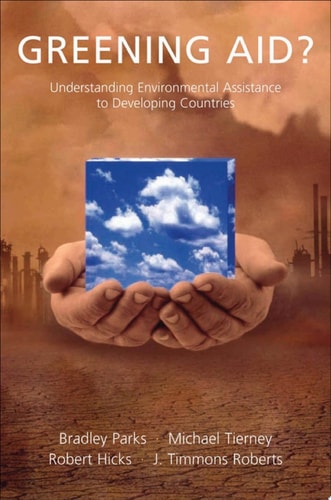
Every year, billions of dollars of environmental aid flow from the rich governments of the North to the poor governments of the South. Why do donors provide this aid? What do they seek to achieve? How effective is the aid given? And does it always go to the places of greatest environmental need? From the first Earth Summit in Stockholm in 1972 to the G8 Gleneagles meeting in 2005, the issue of the impact of aid on the global environment has been the subject of vigorous protest and debate. How much progress has there been in improving environmental protection and clean-up in the developing world? What explains the patterns of environmental aid spending and distribution - is it designed to address real problems, achieve geopolitical or commercial gains abroad, or buy political mileage at home? And what are the consequences for the estimated 4 million people that die each year from air pollution, unsafe drinking water, and lack of sanitation? All of these questions and many more are addressed in this groundbreaking text, which is based on the authors' work compiling the most comprehensive dataset of foreign aid ever assembled. By evaluating the likely environment impact of over 400,000 development projects by more than 50 donors to over 170 recipient nations between 1970 and 2001, Greening Aid represents a unique, state of the art picture of what is happening in foreign assistance, and its impact on the environment. Greening Aid explains major trends and shifts over the last three decades, ranks donors according to their performance, and offers case studies which compare and contrast donors and types of environmental aid.
Menrva's Summary
THE THESIS
This book investigates the efficacy and motivations behind international environmental aid, questioning whether financial assistance from wealthy nations effectively addresses global ecological crises or serves secondary geopolitical interests. The authors, a team of scholars specializing in international relations and development, utilize a massive, original dataset to analyze the intersection of foreign policy and environmental protection. They argue that while billions are spent annually, the distribution of funds often fails to align with the areas of greatest environmental need, suggesting that donor priorities are frequently driven by domestic political or commercial incentives rather than altruistic ecological goals.
THE SCOPE MAP
What You Will Find
- A comprehensive dataset covering over 400,000 development projects.
- Comparative performance rankings of more than 50 international aid donors.
- Longitudinal analysis of aid trends from 1970 to 2001 across 170 recipient nations.
- Case studies illustrating the disparity between stated environmental objectives and actual project outcomes.
Scope Limits
- The analysis concludes at 2001, excluding more recent shifts in climate finance and green technology transfer.
- The text focuses primarily on institutional aid flows rather than private sector or non-governmental environmental initiatives.
THE AUTHORITY PERSPECTIVE
Experts recognize this work as a foundational text for understanding the quantitative realities of international environmental assistance. Readers frequently note the academic density of the prose, which is supported by rigorous data analysis and systematic donor evaluation.
Page Count:
363
Publication Date:
2008-01-01
Publisher:
OUP Oxford
ISBN-10:
0191607495
ISBN-13:
9780191607493
Economics
Foreign Aid
International business
Public Policy
International Development
Community Tags
Similar Books