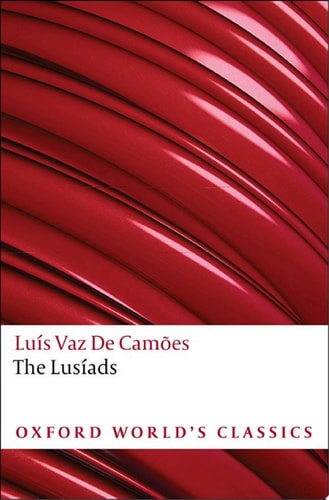
The Lusiads
0
0
As an Amazon Associate and affiliate partner, Menrva Books earns from qualifying purchases. Learn more
Author Description
First published in 1572, The Lusiads is one of the greatest epic poems of the Renaissance, immortalizing Portugal's voyages of discovery with an unrivalled freshness of observation. At the centre of The Lusiads is Vasco da Gama's pioneer voyage via southern Africa to India in 1497-98. The first European artist to cross the equator, Camoes's narrative reflects the novelty and fascination of that original encounter with Africa, India and the Far East. The poem's twin symbols are the Cross and the Astrolabe, and its celebration of a turning point in mankind's knowledge of the world unites the old map of the heavens with the newly discovered terrain on earth. Yet it speaks powerfully, too, of the precariousness of power, and of the rise and decline of nationhood, threatened not only from without by enemies, but from within by loss of integrity and vision. The first translation of The Lusiads for almost half a century, this new edition is complemented by an illuminating introduction and extensive notes. ABOUT THE SERIES: For over 100 years Oxford World's Classics has made available the widest range of literature from around the globe. Each affordable volume reflects Oxford's commitment to scholarship, providing the most accurate text plus a wealth of other valuable features, including expert introductions by leading authorities, helpful notes to clarify the text, up-to-date bibliographies for further study, and much more.
Menrva's Summary
THE PULSE
Vasco da Gama’s historic maritime expedition to India serves as the central conflict, pitting the Portuguese explorers against the vast, unknown dangers of the sea and the interference of Olympian deities. The narrative follows the crew as they navigate the treacherous waters around southern Africa, facing physical exhaustion, mutiny, and the wrath of mythological forces. Camões employs a grand, epic framework that blends historical record with classical allusion to elevate the voyage into a national myth. The poem operates within the constraints of the 16th-century worldview, where the physical discovery of new lands is inextricably linked to the divine mandate of the Portuguese crown.
INSIDE THE PAGES
- Use of classical mythology to frame historical events
- Integration of the Cross and the Astrolabe as central symbolic motifs
- Detailed descriptions of maritime navigation and geographical discovery
- Exploration of the rise and decline of national identity
- Examination of the moral and political consequences of imperial expansion
- Stylistic focus on the novelty of the encounter between European and non-European cultures
- Inclusion of scholarly introduction and extensive historical notes
- Narrative structure rooted in the tradition of the Homeric and Virgilian epics
THE COLLECTIVE ECHO
Discussion often centers on the poem's unique ability to balance the technical realities of 15th-century exploration with the elevated language of Renaissance epic poetry. Readers frequently highlight the vividness of the descriptions regarding the African and Indian coasts, noting how Camões captures the wonder of the era's global expansion. Critics often examine the tension between the celebratory tone of the Portuguese mission and the underlying anxieties regarding the fragility of power and national integrity. The work is widely recognized for its influence on the development of the Portuguese language and its enduring status as a foundational text in Western literature. Scholars emphasize that the poem remains a vital resource for understanding the intersection of early modern exploration and cultural identity.
Page Count:
290
Publication Date:
2001-01-01
Publisher:
OUP Oxford
ISBN-10:
0191604364
ISBN-13:
9780191604362
Classics
Adventure
Historical
Portuguese
Epic Poetry
English
Renaissance
English & College Success
Community Tags
Similar Books