Freud: A Very Short Introduction
0
0
As an Amazon Associate and affiliate partner, Menrva Books earns from qualifying purchases. Learn more
Author Description
Sigmund Freud (1856-1939) revolutionized the way in which we think about ourselves. From its beginnings as a theory of neurosis, Freud developed psycho-analysis into a general psychology which became widely accepted as the predominant mode of discussing personality and interpersonal relationships. ABOUT THE SERIES: The Very Short Introductions series from Oxford University Press contains hundreds of titles in almost every subject area. These pocket-sized books are the perfect way to get ahead in a new subject quickly. Our expert authors combine facts, analysis, perspective, new ideas, and enthusiasm to make interesting and challenging topics highly readable.
Menrva's Summary
THE THESIS
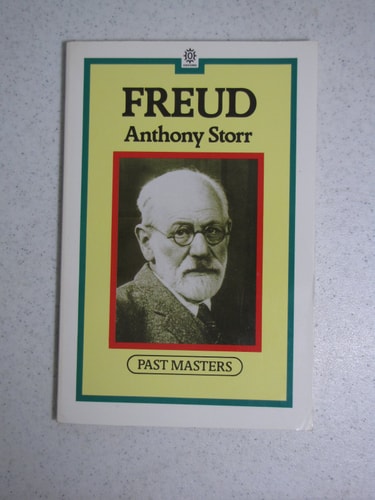
This text investigates the core tenets of Sigmund Freud’s psychoanalytic theories and their enduring impact on modern psychological thought. Anthony Storr, a psychiatrist and author, provides a concise examination of Freud’s transition from treating neurosis to establishing a comprehensive framework for understanding personality and human behavior. The book evaluates the validity of Freud’s clinical observations while contextualizing his work within the intellectual climate of the early twentieth century.
THE SCOPE MAP
What You Will Find
- An overview of Freud’s foundational concepts including the unconscious, defense mechanisms, and dream analysis.
- A biographical sketch of Freud’s professional development and clinical practice.
- Critical analysis of the shift from psychoanalysis as a medical treatment to a general psychological theory.
Scope Limits
- The text does not provide an exhaustive clinical manual for psychoanalytic practice.
- It does not cover the full breadth of post-Freudian developments or contemporary neuroscientific critiques in significant detail.
THE AUTHORITY PERSPECTIVE
Experts and readers recognize this volume as a highly accessible entry point for those seeking a foundational understanding of Freud’s complex theories. The prose is noted for its clarity and ability to distill dense psychological concepts into a manageable format for the general reader.
Page Count:
177
Publication Date:
2001-01-01
Publisher:
OUP Oxford
ISBN-10:
0191606650
ISBN-13:
9780191606656
Psychology
Philosophy
Biography
Psychoanalysis
Science History
History of Psychology
Community Tags
Other Editions(3)

Similar Books