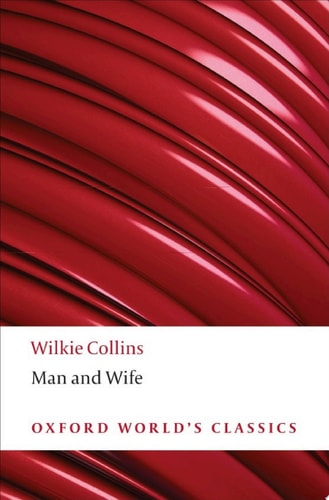
Man and Wife
0
0
As an Amazon Associate and affiliate partner, Menrva Books earns from qualifying purchases. Learn more
Author Description
This time the fiction is founded upon facts' stated Wilkie Collins in his Preface to Man and Wife (1870). Many Victorian writers responded to contemporary debates on the rights and the legal status of women, and here Collins questions the deeply inequitable marriage laws of his day. Man and Wife examines the plight of a woman who, promised marriage by one man, comes to believe that she may inadvertently have gone through a form of marriage with his friend, as recognized by the archaic laws of Scotland and Ireland. From this starting-point Collins develops a radical critique of the values and conventions of Victorian society. Collins had already developed a reputation as the master of the `sensation novel', and Man and Wife is as fast moving and unpredictable as The Moonstone and The Woman in White. During the novel the atmosphere grows increasingly sinister as the setting moves from a country house to a London suburb and a world of confinement, plotting, and murder.
Menrva's Summary
THE PULSE
A woman finds her future compromised when she discovers that archaic marriage laws may have inadvertently bound her to a man she never intended to wed. Anne Silvester seeks to secure her status and future, but she faces opposition from rigid legal frameworks and the duplicitous actions of those around her. The narrative explores the vulnerability of women under Victorian statutes, utilizing a multi-perspective approach to reveal the consequences of social and legal inequity. As the protagonist navigates these constraints, she encounters physical confinement and psychological pressure from antagonists who exploit the loopholes of Scottish and Irish law. The story unfolds through a series of escalating complications that challenge the moral and legal foundations of the era.
INSIDE THE PAGES
- Critique of Victorian marriage laws
- Sensation novel pacing
- Shift from country house to urban setting
- Exploration of legal loopholes in Scotland and Ireland
- Themes of confinement and social status
- Unpredictable plot developments
- Focus on the legal status of women
- Sinister atmosphere and suspenseful tone
THE COLLECTIVE ECHO
Readers frequently highlight the novel's effectiveness in blending social critique with the suspenseful mechanics of the sensation genre. Discussion often centers on the author's ability to transform dry legal debates into a compelling narrative of personal peril and societal hypocrisy. Critics note that the pacing remains brisk, maintaining tension as the setting shifts from the relative safety of a country estate to the claustrophobic environments of London. The work is often examined for its contribution to the discourse on women's rights during the nineteenth century, with many readers appreciating the balance between character-driven drama and plot-heavy intrigue.
Page Count:
689
Publication Date:
1998-01-01
Publisher:
OUP Oxford
ISBN-10:
0191611212
ISBN-13:
9780191611216
Mystery
Historical
Victorian
Married People
English
Social Commentary
classic
England
English & College Success
Community Tags
Other Editions(20)

Mint Editions
2021
Default edition
Independently Published
2021

CreateSpace Independent Publishing Platform
2017

CreateSpace Independent Publishing Platform
2017

CreateSpace Independent Publishing Platform
2017

CreateSpace Independent Publishing Platform
2015

IndyPublish.com
2009

IndyPublish.com
2008

Dodo Press
2007

Tutis Digital Publishing Pvt. Limited
2007

Echo Library
2005

eBooksLib
2005

Kessinger Publishing
2004

Wildside Press, LLC
2004
IndyPublish.com
2003

IndyPublish.com
2002
OUP Oxford
1998
Oxford University Press
1995

Alan Sutton
1990
Dover
1983
Similar Books



Reader Comments
Share Your Thoughts
No comments yet. Be the first to share your thoughts!