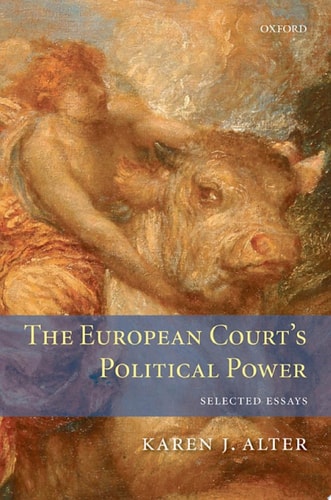
The European Court's Political Power
0
0
As an Amazon Associate and affiliate partner, Menrva Books earns from qualifying purchases. Learn more
Author Description
Karen Alter's Work On The European Court Of Justice Heralded A New Level Of Sophistication In The Political Analysis Of The Controversial Institution, Through Its Combination Of Legal Understanding And Active Engagement With Theoretical Questions. The European Court's Political Power Assembles The Most Important Of Alter's Articles Written Over A Fourteen Year Span, Adding An Original New Introduction And A Conclusion That Takes An Overview Of The Court's Development And Current Concerns. Together The Articles Provide Insight Into The Historical And Political Contours Of The Ecj's Influence On European Politics, Explaining How And Why The Impact Of An Institution Can Vary So Greatly Over Time And Access Different Issues. The Book Starts With The European Coal And Steel Community, Where The Ecj Was Largely Unable To Facilitate Greater Member State Respect For Ecsc Rules. Alter Then Shows How Legal Actors Orchestrated An Activist Transformation Of The European Legal System, With The Critical Aid Of Jurist Advocacy Movements, And Via The Co-optation Of National Courts. The Transformation Of The European Legal System Wrested Control From Member States Over The Meaning Of European Law, But The Ecj Continues To Have Varying Influence Across Different Issues. Alter Explains That The Differing Influence Of The Ecj Comes From The Varied Extent To Which Sub- And Supra-national Actors Turn To It To Achieve Political Objectives. Looking Beyond The European Experience, The Book Includes Four Chapters That Put The Ecj Into A Comparative Perspective, Examining The Extent To Which The Ecj Experience Is A Unique Harbinger Of The Future Role International Courts May Play In International And Comparative Politics.
Menrva's Summary
THE THESIS
This collection investigates the mechanisms through which the European Court of Justice (ECJ) exerts political influence and how that influence fluctuates across different historical periods and policy domains. Karen Alter, a scholar of international law and politics, synthesizes fourteen years of research to explain the evolution of the ECJ from its origins in the European Coal and Steel Community to its current role as a central actor in European governance. The work argues that the court's power is not static but is instead contingent upon the strategic engagement of sub-national and supra-national actors who utilize the legal system to advance specific political agendas.
THE SCOPE MAP
What You Will Find
- Analysis of the ECJ's development from the European Coal and Steel Community to modern European Union law.
- Examination of the role of jurist advocacy movements and national courts in the transformation of the European legal system.
- Comparative chapters placing the ECJ within the broader context of international courts and global politics.
Scope Limits
- The text focuses primarily on political and institutional analysis rather than providing a comprehensive technical manual for practicing international law.
- It does not cover every individual case ruling in the court's history, focusing instead on broader trends and systemic shifts.
THE AUTHORITY PERSPECTIVE
Experts recognize this collection as a foundational text for understanding the intersection of law and politics within the European Union. Readers frequently note the academic density of the prose, which is well-suited for students and scholars of political science and international law.
Page Count:
368
Publication Date:
2010-01-01
Publisher:
Oup Oxford
ISBN-10:
0191616486
ISBN-13:
9780191616488
Law
International relations