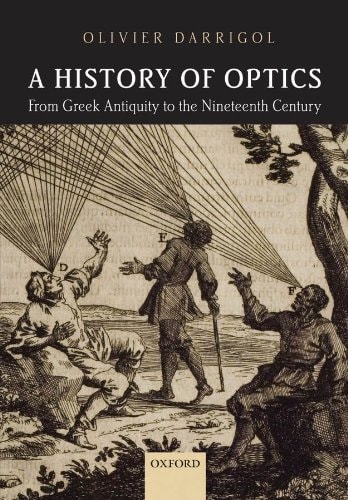
A History of Optics from Greek Antiquity to the Nineteenth Century
0
0
As an Amazon Associate and affiliate partner, Menrva Books earns from qualifying purchases. Learn more
Author Description
This book is a long-term history of optics, from early Greek theories of vision to the nineteenth-century victory of the wave theory of light. It shows how light gradually became the central entity of a domain of physics that no longer referred to the functioning of the eye; it retraces the subsequent competition between medium-based and corpuscular concepts of light; and it details the nineteenth-century flourishing of mechanical ether theories. The author critically exploits and sometimes completes the more specialized histories that have flourished in the past few years. The resulting synthesis brings out the actors' long-term memory, their dependence on broad cultural shifts, and the evolution of disciplinary divisions and connections. Conceptual precision, textual concision, and abundant illustration make the book accessible to a broad variety of readers interested in the origins of modern optics.
Menrva's Summary
THE THESIS
This book investigates the historical evolution of optical theory from ancient Greek vision concepts to the establishment of nineteenth-century wave mechanics. Olivier Darrigol, a historian of science, synthesizes specialized research to track how light transitioned from a biological or sensory phenomenon into a central, independent entity within physics. The text examines the interplay between medium-based and corpuscular theories, highlighting the influence of cultural shifts and disciplinary changes on scientific progress.
THE SCOPE MAP
What You Will Find
- Chronological analysis of optical theories from antiquity through the 1800s
- Detailed examination of the transition from eye-centric vision theories to wave-based light physics
- Comparative study of mechanical ether theories and corpuscular concepts
- Extensive use of historical primary sources and specialized academic literature
Scope Limits
- The text focuses primarily on the development of physical optics rather than modern quantum or relativistic optics
- It does not provide an exhaustive biography of every individual scientist involved in the field
THE AUTHORITY PERSPECTIVE
Experts recognize this work as a comprehensive synthesis that bridges the gap between specialized historical studies and broader scientific history. Readers frequently note the academic density of the prose, which is balanced by clear conceptual explanations and helpful illustrations.
Page Count:
344
Publication Date:
2012-01-01
Publisher:
OUP Oxford
ISBN-10:
0191626945
ISBN-13:
9780191626944
Physics history
Physics
Categories
Philosophy history
Optics
Kindle eBooks
Nuclear Physics
Kindle Store
Science History
Scientific History
Community Tags
Other Editions(3)
Similar Books