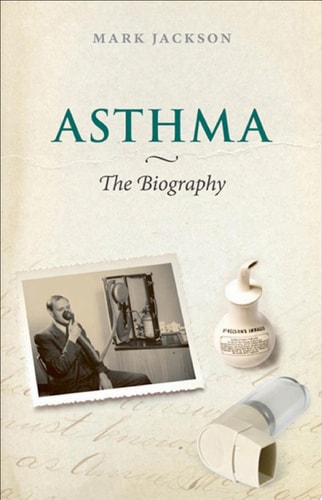
Asthma: The Biography
0
0
As an Amazon Associate and affiliate partner, Menrva Books earns from qualifying purchases. Learn more
Author Description
Asthma is a familiar and growing disease today, but its story goes back to the ancient world, as we know from accounts in ancient texts from China, India, Greece and Rome. It was treated with acupuncture and Ayurveda. As Western medicine developed, the nature of asthma became clearer, and its basis in the lungs recognized. But cultural perceptions of the disease shifted too. By the 18th century, with recognition that the disease was centred on the lungs, the idea of environmental triggers such as dust and smoke first became recognized. And with that, asthma also became identified as a disease of artisans. Things changed again in the 19th century, as medical understanding grew with the advent of the stethoscope and new techniques such as percussion of the chest. New treatments included the promotion of mountain spas, for asthma now rose in social status, and became associated with the upper classes and the literati. For Marcel Proust and Charles Dickens, asthma shaped their lives and their creativity. From early in the 20th century, the idea of asthma as an allergic disease became established, and the search for environmental causes was on. Hay fever was closely linked, and pharmaceutical companies began to make antihistamines, anti-inflammatories and bronchodilators. Asthma sufferers were warned to beware of pets, simplify their furnishings, and take holidays by the sea far from pollens. But a newly emerging concept was that attacks could be triggered by stress and psychological factors. With musicians such as Schoenberg and Berg as celebrity sufferers, the idea of asthma as an élite disease persisted. In recent years, attitudes have changed again, as incidences of asthma grew dramatically across the world, especially among the young. The disease has now become closely linked to modern lifestyles and the many products of civilization. The battle against house-dust mites began, and whole new lines of anti-allergenic products and foods were launched - asthma has prove
Menrva's Summary
THE THESIS
This book investigates the historical evolution of asthma, tracing how medical understanding and cultural perceptions of the condition have shifted from antiquity to the modern era. Mark Jackson, a professor of the history of medicine, utilizes a wide array of historical texts, medical records, and cultural accounts to argue that asthma is not merely a biological phenomenon but a condition deeply shaped by social status, environmental changes, and evolving scientific paradigms. The work provides a comprehensive framework for understanding how a disease is constructed through the intersection of clinical observation and societal belief.
THE SCOPE MAP
What You Will Find
- Historical accounts of asthma treatments from ancient China, India, Greece, and Rome.
- Analysis of the 19th-century shift in perception, linking asthma to social status and the literati.
- Examination of the 20th-century transition toward viewing asthma as an allergic and psychological condition.
- Documentation of the rise of pharmaceutical interventions and environmental trigger awareness.
Scope Limits
- The text does not provide a clinical manual or medical advice for current asthma management.
- The analysis focuses primarily on Western medical history and cultural interpretations rather than exhaustive global clinical data.
THE AUTHORITY PERSPECTIVE
Experts and readers frequently highlight this work as a foundational text for understanding the social history of chronic illness. The prose is noted for its accessibility, effectively balancing rigorous historical research with a narrative that remains engaging for both medical professionals and general readers.
Page Count:
262
Publication Date:
2009-01-01
Publisher:
OUP Oxford
ISBN-10:
0191622826
ISBN-13:
9780191622823
Health
Asthma
MEDICAL History
Science History
Social Science
Social History
Biography of Disease
Community Tags
Similar Books