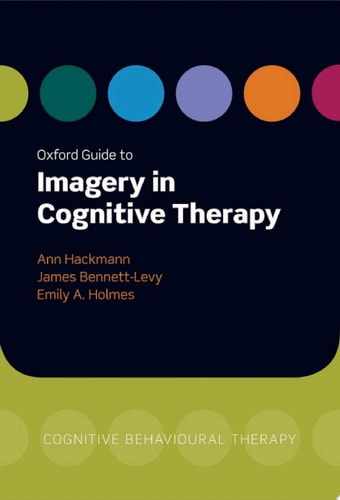
Oxford Guide to Imagery in Cognitive Therapy
0
0
As an Amazon Associate and affiliate partner, Menrva Books earns from qualifying purchases. Learn more
Author Description
Imagery is one of the new, exciting frontiers in cognitive therapy. From the outset of cognitive therapy, its founder Dr. Aaron T. Beck recognised the importance of imagery in the understanding and treatment of patient's problems. However, despite Beck's prescience, clinical research on imagery, and the integration of imagery interventions into clinical practice, developed slowly. It is only in the past 10 years that most writing and research on imagery in cognitive therapy has been conducted. The Oxford Guide to Imagery in Cognitive Therapy is a landmark book, which will play an important role in the next phase of cognitive therapy's development. Clinicians and researchers are starting to recognise the centrality of imagery in the development, maintenance and treatment of psychological disorders - for example, in social phobia, agoraphobia, depression, PTSD, eating disorders, childhood trauma, and personality disorder. In the fields of cognitive psychology and cognitive neuroscience, researchers are identifying the key role that imagery plays in emotion, cognition and psychopathology. The Oxford Guide to Imagery in Cognitive Therapy has been written both for clinicians and researchers. For clinicians, it is a user-friendly, practical guide to imagery, which will enable therapists to understand imagery phenomenology, and to integrate imagery-based interventions into their cognitive therapy practice. For researchers, it provides a state-of-the-art summary of imagery research, and points the way to future studies. Written by three well-respected CBT researcher-clinicians, it is essential reading for all cognitive therapists, who have recognised the limitations of purely 'verbal' CBT techniques, and want to find new ways to work with clients with psychological disorders.
Menrva's Summary
THE THESIS
This text investigates the role of mental imagery in the development, maintenance, and treatment of various psychological disorders within the framework of cognitive therapy. The authors, Ann Hackmann, Emily A. Holmes, and James Bennett-Levy, are established researcher-clinicians who synthesize recent advancements in cognitive neuroscience and clinical practice. They argue that imagery is a central component of psychopathology and provide a structured approach for integrating imagery-based interventions into standard cognitive behavioral therapy protocols.
THE SCOPE MAP
What You Will Find
- Theoretical foundations of imagery in cognitive psychology and neuroscience
- Practical techniques for identifying and working with patient imagery
- Clinical applications for disorders including social phobia, PTSD, depression, and eating disorders
- Summaries of current research and future directions for clinical study
Scope Limits
- The text focuses primarily on cognitive behavioral therapy applications rather than psychodynamic or psychoanalytic approaches to imagery
- It does not serve as a comprehensive manual for non-CBT therapeutic modalities
THE AUTHORITY PERSPECTIVE
Experts recognize this work as a foundational text for clinicians seeking to move beyond purely verbal CBT interventions. Readers frequently note the balance between academic rigor and practical, user-friendly guidance for daily clinical practice.
Page Count:
278
Publication Date:
2011-01-01
Publisher:
OUP Oxford
ISBN-10:
0191620750
ISBN-13:
9780191620751
Psychology
Neuroscience
Mental Health
Psychotherapy
Behavioral Therapy
Community Tags
Similar Books