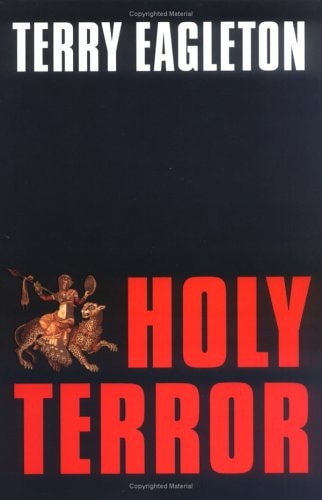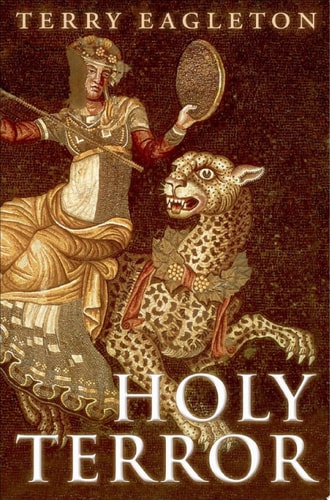
Holy Terror
0
0
As an Amazon Associate and affiliate partner, Menrva Books earns from qualifying purchases. Learn more
Author Description
Holy Terror is a profound and timely investigation of the idea of terror, drawing upon political, philosophical, literary, and theological sources to trace a genealogy from the ancient world to the modern day. Rather than add to the mounting pile of political studies of terrorism, Terry Eagleton offers here a metaphysics of terror with a serious historical perspective. Writing with remarkable clarity and persuasive insight he examines a concept whose cultural impact predates 9/11 by millennia. From its earliest manifestations in rite and ritual, through the French Revolution to the 'War on Terror' of today, terror has been regarded with both horror and fascination. Eagleton examines the duality of the sacred (both life-giving and death-dealing) and relates it, via current and past ideas of freedom, to the idea of terror itself. Stretching from the cult of Dionysus to the thought of Jacques Lacan, the book takes in en route ideas of God, freedom, the sublime, and the unconscious. It also examines the problem of evil, and devotes a concluding chapter to the idea of tragic sacrifice and the scapegoat. Written by one of the world's foremost cultural critics, Holy Terror is a provocative and ambitious examination of one of the most urgent issues of our time.
Menrva's Summary
THE THESIS
This book investigates the metaphysical and historical roots of terror, questioning how the concept of the sacred intersects with violence and political freedom. Terry Eagleton, a prominent cultural critic, utilizes a multidisciplinary approach to analyze the evolution of terror from ancient rituals to contemporary political conflicts. By synthesizing theological, literary, and philosophical frameworks, he argues that terror is deeply embedded in the human experience of the sacred and the sublime.
THE SCOPE MAP
What You Will Find
- A historical genealogy of terror spanning from the cult of Dionysus to modern political discourse.
- An analysis of the duality of the sacred as both life-giving and death-dealing.
- Philosophical inquiries into the nature of freedom, evil, and the unconscious.
- Examinations of tragic sacrifice and the role of the scapegoat in societal structures.
Scope Limits
- The text does not provide a contemporary policy analysis or a standard political science study of modern terrorism.
- It avoids focusing on specific geopolitical events in isolation, preferring a broader metaphysical lens.
THE AUTHORITY PERSPECTIVE
Critics and scholars often note the intellectual density of Eagleton's prose, which requires familiarity with continental philosophy and literary theory. Experts frequently highlight this work as a significant contribution to the cultural history of violence, noting its departure from conventional political analysis.
Page Count:
158
Publication Date:
2005-01-01
Publisher:
OUP Oxford
ISBN-10:
0191622974
ISBN-13:
9780191622977
History
Philosophy
Reference
Metaphysics
Religious Aspects
Violence
Social History
Theology