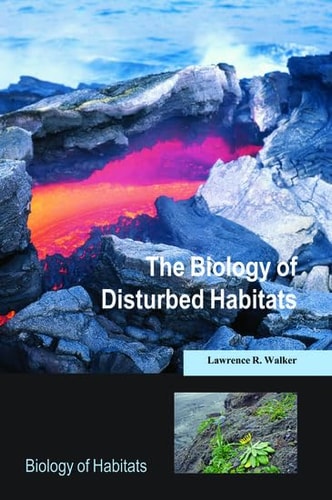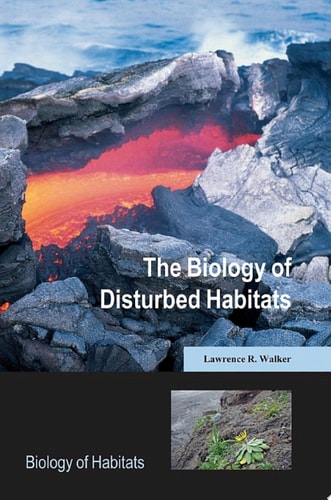
The Biology of Disturbed Habitats
0
0
As an Amazon Associate and affiliate partner, Menrva Books earns from qualifying purchases. Learn more
Author Description
This book provides the first global synthesis of the biology of disturbed habitats and offers readers both the conceptual underpinnings and practical advice required to comprehend and address the unprecedented environmental challenges facing humans. Every habitat on earth has been impacted by natural disturbances such as volcanoes, earthquakes, landslides, fires, floods, and droughts. Humans have contributed many additional disturbances such as mining, urbanization, forestry, agriculture, fishing, and recreation. These anthropogenic disturbances modify and often exacerbate the effects of the natural disturbances. Together, they result in the abrupt loss of biomass or ecosystem structure and function to create denuded surfaces where novel mixtures of native and non-native microbes, plants, and animals establish, grow, and die. The Biology of Disturbed Habitats examines both natural and anthropogenic disturbances in aquatic and terrestrial habitats. It explores how nutrients and productivity are altered in the disturbed habitats, the effects of disturbance on biodiversity, and the spatial and temporal dynamics of organisms that colonize disturbed habitats. This book also addresses how to manage disturbances through appropriate conservation and restoration measures, and discusses how climate change and overpopulation now represent the most challenging disturbances at a global scale.
Menrva's Summary
THE THESIS
This book investigates the ecological consequences of natural and anthropogenic disturbances on global habitats and provides a framework for understanding ecosystem recovery. Lawrence R. Walker, an expert in plant ecology and disturbance dynamics, synthesizes data from diverse terrestrial and aquatic environments. He argues that understanding the interaction between natural events and human-induced changes is critical for effective conservation and restoration strategies in an era of rapid environmental shift.
THE SCOPE MAP
What You Will Find
- Analysis of natural disturbance agents including volcanoes, fires, and floods.
- Examination of anthropogenic impacts such as mining, urbanization, and agriculture.
- Discussion of nutrient cycling and productivity shifts in denuded landscapes.
- Frameworks for biodiversity management and ecosystem restoration.
Scope Limits
- The text focuses primarily on ecological and biological mechanisms rather than socio-political policy analysis.
- It does not provide exhaustive site-specific management plans for every global biome.
THE AUTHORITY PERSPECTIVE
Experts recognize this work as a foundational synthesis that bridges the gap between theoretical ecology and practical conservation management. Readers frequently note the academic density of the prose, which makes it a valuable resource for researchers and advanced students in the environmental sciences.
Page Count:
360
Publication Date:
2011-01-01
Publisher:
OUP Oxford
ISBN-10:
0191625329
ISBN-13:
9780191625329
Science
Natural History
Conservation
Biology
Ecology