How to Study for a Mathematics Degree
0
0
As an Amazon Associate and affiliate partner, Menrva Books earns from qualifying purchases. Learn more
Author Description
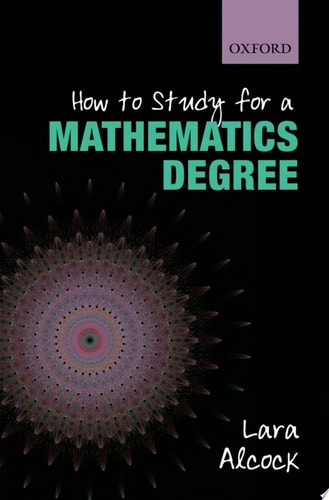
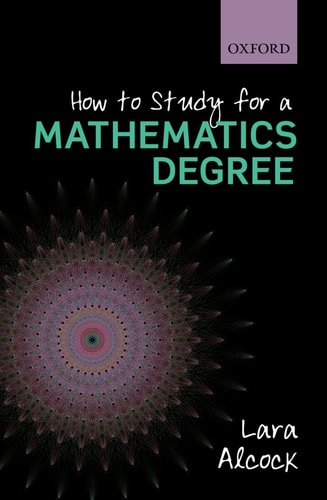
Every Year, Thousands Of Students Go To University To Study Mathematics (single Honours Or Combined With Another Subject). Many Of These Students Are Extremely Intelligent And Hardworking, But Even The Best Will, At Some Point, Struggle With The Demands Of Making The Transition To Advanced Mathematics. Some Have Difficulty Adjusting To Independent Study And To Learning From Lectures. Other Struggles, However, Are More Fundamental: The Mathematics Shifts In Focus From Calculation To Proof, So Students Are Expected To Interact With It In Different Ways. These Changes Need Not Be Mysterious - Mathematics Education Research Has Revealed Many Insights Into The Adjustments That Are Necessary - But They Are Not Obvious And They Do Need Explaining. This No-nonsense Book Translates These Research-based Insights Into Practical Advice For A Student Audience. It Covers Every Aspect Of Studying For A Mathematics Degree, From The Most Abstract Intellectual Challenges To The Everyday Business Of Interacting With Lecturers And Making Good Use Of Study Time. Part 1 Provides An In-depth Discussion Of Advanced Mathematical Thinking, And Explains How A Student Will Need To Adapt And Extend Their Existing Skills In Order To Develop A Good Understanding Of Undergraduate Mathematics. Part 2 Covers Study Skills As These Relate To The Demands Of A Mathematics Degree. It Suggests Practical Approaches To Learning From Lectures And To Studying For Examinations While Also Allowing Time For A Fulfilling All-round University Experience. The First Subject-specific Guide For Students, This Friendly, Practical Text Will Be Essential Reading For Anyone Studying Mathematics At University.
Menrva's Summary
THE THESIS
This book investigates the specific cognitive and behavioral adjustments required for students to successfully transition from secondary school mathematics to the rigorous demands of an undergraduate mathematics degree. Author Lara Alcock, a researcher in mathematics education, synthesizes pedagogical insights to address the fundamental shift from calculation-based learning to proof-based mathematical reasoning. The text provides a structured framework for students to navigate both the abstract intellectual challenges of higher-level mathematics and the practical logistics of university study.
THE SCOPE MAP
What You Will Find
- Analysis of advanced mathematical thinking and proof-based reasoning
- Strategies for effective lecture engagement and independent study
- Practical methodologies for examination preparation
- Advice on balancing academic rigor with university life
Scope Limits
- Does not provide specific mathematical content or curriculum tutoring
- Does not cover career planning or post-graduate employment strategies
THE AUTHORITY PERSPECTIVE
Experts and educators frequently cite this work as a foundational resource for incoming mathematics undergraduates due to its evidence-based approach. Readers often note that the prose is accessible yet maintains the academic seriousness required for the subject matter.
Page Count:
288
Publication Date:
2012-01-01
Publisher:
Oxford University Press, Incorporated
ISBN-10:
019163736X
ISBN-13:
9780191637360
Study Skills
Mathematics
University Guide
Education
Community Tags
Other Editions(2)
Similar Books