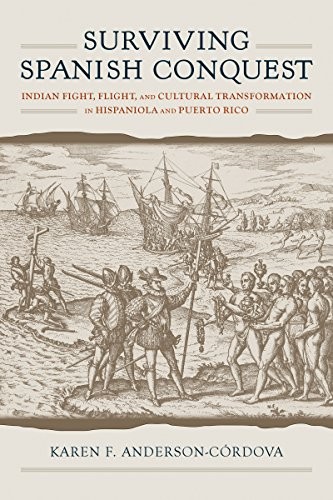
Surviving Spanish Conquest
0
0
As an Amazon Associate and affiliate partner, Menrva Books earns from qualifying purchases. Learn more
Author Description
An ethnohistoric and archaeological study of the transformations that occurred in Indian communities during the Spanish conquest of Hispaniola and Puerto Rico from 1492 to 1550. In Surviving Spanish Conquest: Indian Fight, Flight, and Cultural Transformation in Hispaniola and Puerto Rico, Karen F. Anderson-Córdova draws on archaeological, historical, and ethnohistorical sources to elucidate the impacts of sixteenth-century Spanish conquest and colonization on indigenous peoples in the Greater Antilles. Moving beyond the conventional narratives of the quick demise of the native populations because of forced labor and the spread of Old World diseases, this book shows the complexity of the initial exchange between the Old and New Worlds and examines the myriad ways the indigenous peoples responded to Spanish colonization. Focusing on Hispaniola and Puerto Rico, the first Caribbean islands to be conquered and colonized by the Spanish, Anderson-Córdova explains Indian sociocultural transformation within the context of two specific processes, out-migration and in-migration, highlighting how population shifts contributed to the diversification of peoples. For example, as the growing presence of 'foreign' Indians from other areas of the Caribbean complicated the variety of responses by Indian groups, her investigation reveals that Indians who were subjected to slavery, or the 'encomienda system,' accommodated and absorbed many Spanish customs, yet resumed their own rituals when allowed to return to their villages. Other Indians fled in response to the arrival of the Spanish. The culmination of years of research, Surviving Spanish Conquest deftly incorporates archaeological investigations at contact sites copious use of archival materials, and anthropological assessments of the contact period in the C
Menrva's Summary
THE THESIS
This book investigates the complex and multifaceted responses of indigenous communities in Hispaniola and Puerto Rico to the Spanish conquest and colonization between 1492 and 1550. Karen F. Anderson-Córdova, drawing on ethnohistoric and archaeological evidence, moves beyond traditional narratives of swift indigenous demise. She examines how native populations navigated forced labor, disease, and cultural imposition, revealing a dynamic process of adaptation, resistance, and transformation. The study focuses on the critical roles of out-migration and in-migration in diversifying indigenous societies and shaping their interactions with the Spanish.
THE SCOPE MAP
- Ethnohistoric and archaeological study of indigenous communities during the Spanish conquest.
- Focus on Hispaniola and Puerto Rico, 1492-1550.
- Analysis of Indian fight, flight, and cultural transformation.
- Exploration of the complexity of the initial exchange between the Old and New Worlds.
- Examination of indigenous responses to Spanish colonization beyond forced labor and disease.
- Highlighting the impact of population shifts (out-migration and in-migration) on indigenous societies.
- Case studies of accommodation and resumption of rituals under the encomienda system.
- Incorporation of archaeological investigations at contact sites and archival materials.
THE AUTHORITY PERSPECTIVE
This book is an ethnohistoric and archaeological study that challenges conventional narratives of indigenous populations' quick demise during the Spanish conquest. It highlights the complexity of early intercultural exchanges and the diverse ways indigenous peoples responded to colonization. The research emphasizes the roles of population shifts and the adaptation of Spanish customs while maintaining indigenous rituals. The work is grounded in extensive research, incorporating archaeological findings and archival materials to provide a nuanced perspective on the contact period in the Greater Antilles.
Page Count:
272
Publication Date:
2017-01-01
ISBN-10:
0817319468
ISBN-13:
9780817319465
History
Science
Non-Fiction
Archaeology
Caribbean Studies
Colonialism
Community Tags
Similar Books