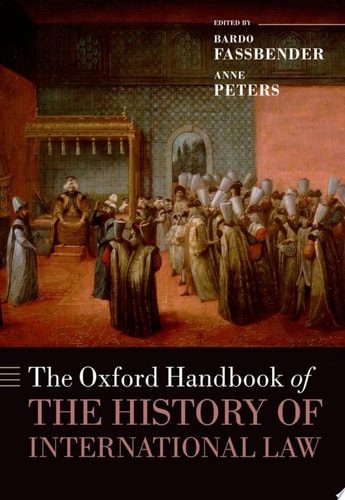
The Oxford Handbook of the History of International Law
0
0
As an Amazon Associate and affiliate partner, Menrva Books earns from qualifying purchases. Learn more
Author Description
The Oxford Handbook Of The History Of International Law Provides An Authoritative And Original Overview Of The Origins, Concepts, And Core Issues Of International Law. The First Comprehensive Handbook On The History Of International Law, It Is A Truly Unique Contribution To The Literature Of International Law And Relations. Pursuing Both A Global And An Interdisciplinary Approach, The Handbook Brings Together Some Sixty Eminent Scholars Of International Law, Legal History, And Global History From All Parts Of The World. Covering International Legal Developments From The 15th Century Until The End Of World War Ii, The Handbook Consists Of Over Sixty Individual Chapters Which Are Arranged In Six Parts. The Book Opens With An Analysis Of The Principal Actors In The History Of International Law, Namely States, Peoples And Nations, International Organisations And Courts, And Civil Society Actors. Part Two Is Devoted To A Number Of Key Themes Of The History Of International Law, Such As Peace And War, The Sovereignty Of States, Hegemony, Religion, And The Protection Of The Individual Person. Part Three Addresses The History Of International Law In The Different Regions Of The World (africa And Arabia, Asia, The Americas And The Caribbean, Europe), As Well As 'encounters' Between Non-european Legal Cultures (like Those Of China, Japan, And India) And Europe Which Had A Lasting Impact On The Body Of International Law. Part Four Examines Certain Forms Of 'interaction Or Imposition' In International Law, Such As Diplomacy (as An Example Of Interaction) Or Colonization And Domination (as An Example Of Imposition Of Law). The Classical Juxtaposition Of The Civilized And The Uncivilized Is Also Critically Studied. Part Five Is Concerned With Problems Of The Method And Theory Of History Writing In International Law, For Instance The Periodisation Of International Law, Or Eurocentrism In The Traditional Historiography Of International Law. The Handbook Concludes With A Part Six, E
Menrva's Summary
THE THESIS
This volume investigates the evolution, conceptual foundations, and global development of international law from the 15th century through the conclusion of World War II. Edited by Anne Peters, Bardo Fassbender, and a team of distinguished contributors, the work utilizes a multidisciplinary framework to challenge traditional Eurocentric narratives. By integrating perspectives from legal history, global history, and international relations, the authors provide a comprehensive analysis of how international legal norms were constructed, contested, and imposed across diverse regions.
THE SCOPE MAP
What You Will Find
- Analysis of primary actors including states, international organizations, and civil society.
- Examination of thematic pillars such as sovereignty, peace, war, and human rights.
- Regional histories covering Africa, Arabia, Asia, the Americas, and Europe.
- Methodological critiques regarding periodization and historiography in legal studies.
Scope Limits
- The text concludes its historical analysis at the end of World War II.
- It does not provide an exhaustive account of post-1945 international legal developments.
THE AUTHORITY PERSPECTIVE
Experts recognize this handbook as a foundational reference for scholars and students of international law and legal history. Readers frequently note the academic density of the prose and the breadth of the global perspectives presented by the contributors.
Page Count:
1272
Publication Date:
2012-01-01
Publisher:
Oup Oxford
ISBN-10:
0191632511
ISBN-13:
9780191632518
History
Reference
International Law
Legal History
Academic
Community Tags
Other Editions(2)
Similar Books







Reader Comments
Share Your Thoughts
No comments yet. Be the first to share your thoughts!