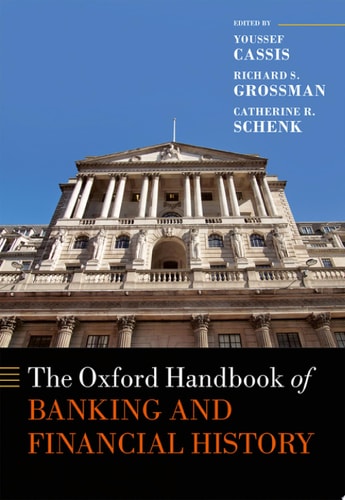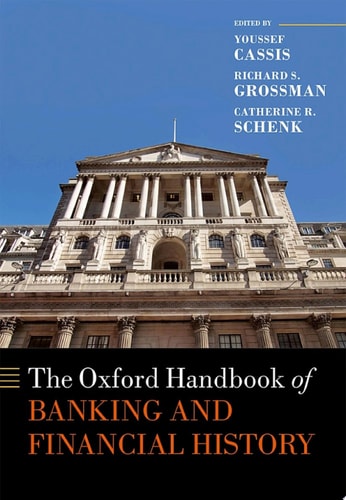
The Oxford Handbook of Banking and Financial History
0
0
As an Amazon Associate and affiliate partner, Menrva Books earns from qualifying purchases. Learn more
Author Description
The financial crisis of 2008 aroused widespread interest in banking and financial history among policy makers, academics, journalists, and even bankers, in addition to the wider public. References in the press to the term 'Great Depression' spiked after the failure of Lehman Brothers in November 2008, with similar surges in references to 'economic history' at various times during the financial turbulence. In an attempt to better understand the magnitude of the shock, there was a demand for historical parallels. How severe was the financial crash? Was it, in fact, the most severe financial crisis since the Great Depression? Were its causes unique or part of a well-known historical pattern? And have financial crises always led to severe depressions? Historical reflection on the recent financial crises and the long-term development of the financial system go hand in hand. This volume provides the material for such a reflection by presenting the state of the art in banking and financial history. Nineteen highly regarded experts present chapters on the economic and financial side of banking and financial activities, primarily though not solely in advanced economies, in a long-term comparative perspective. In addition to paying attention to general issues, not least those related to theoretical and methodological aspects of the discipline, the volume approaches the banking and financial world from four distinct but interrelated angles: financial institutions, financial markets, financial regulation, and financial crises.
Menrva's Summary
THE THESIS
This volume investigates the long-term development of banking and financial systems to provide historical context for modern financial crises. The editors, Youssef Cassis, Catherine R. Schenk, and Richard S. Grossman, have curated contributions from nineteen experts to synthesize the state of the art in financial history. The text argues that understanding contemporary economic turbulence requires a comparative analysis of historical patterns, institutional evolution, and regulatory frameworks.
THE SCOPE MAP
What You Will Find
- Comparative analysis of banking and financial activities in advanced economies
- Theoretical and methodological frameworks for studying financial history
- Examination of financial institutions, markets, and regulatory systems
- Historical data on the evolution of financial crises
Scope Limits
- Primary focus on advanced economies rather than a global or developing market perspective
- Does not provide a comprehensive history of every individual banking institution
THE AUTHORITY PERSPECTIVE
Experts identify this volume as a comprehensive reference work that bridges the gap between historical research and contemporary policy analysis. Readers frequently note the academic density of the prose, which serves as a foundational resource for scholars and professionals seeking to contextualize modern financial instability.
Page Count:
552
Publication Date:
2016-01-01
Publisher:
OUP Oxford
ISBN-10:
0191633224
ISBN-13:
9780191633225
Economics
Reference
Banking
Money & BankingMonetary Theory
Financial History
Finance
Economics history
Economic History