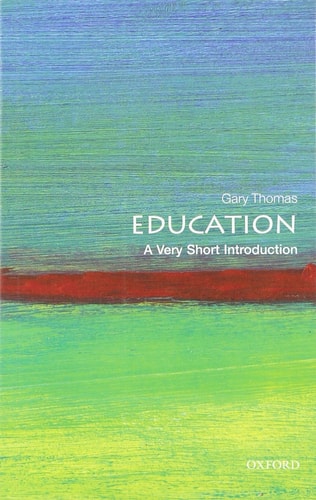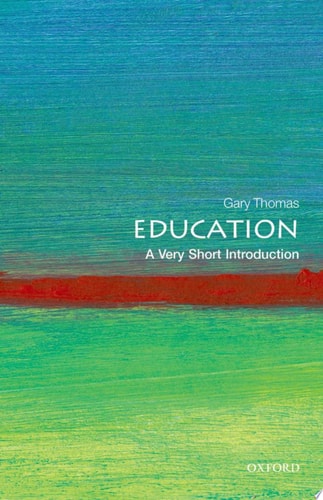
Education: A Very Short Introduction
0
0
As an Amazon Associate and affiliate partner, Menrva Books earns from qualifying purchases. Learn more
Author Description
From The Schools Of Ancient Times To The Present Day, Gary Thomas Explores How And Why Education Has Evolved Has It Has. Examining Education Worldwide, He Explains The Way Schools Work, Noting How Curricula Are Remarkably Consistent Around The World. Delving Into Some Of The Big Questions, Thomas Explores The History Of Education In This Very Short Introduction. Considering Various Styles Such As Progressive Versus Formal, He Also Explores The Ideas Of Some Of The Big Theorists, Including Piaget And Vygotsky. Looking At Different Forms Of Education And Styles Of Teaching, He Considers The Ways In Which Education Is Being Improved By Matching Styles Of Learning To Teaching, And Ensuring That Schools Are More Inclusive And Meaningful For A Broader Range Of Students. He Finishes By Considering The Ways In Which Education May Develop Over The Coming Century. About The Series: The Very Short Introductions Series From Oxford University Press Contains Hundreds Of Titles In Almost Every Subject Area. These Pocket-sized Books Are The Perfect Way To Get Ahead In A New Subject Quickly. Our Expert Authors Combine Facts, Analysis, Perspective, New Ideas, And Enthusiasm To Make Interesting And Challenging Topics Highly Readable.
Menrva's Summary
THE THESIS
This book investigates the historical evolution, structural consistency, and future trajectory of global educational systems. Gary Lee Thomas, an expert in educational theory, utilizes a comparative framework to analyze how pedagogical methods have shifted from ancient practices to modern classroom environments. He synthesizes the contributions of major theorists like Piaget and Vygotsky to evaluate the efficacy of various teaching styles and the ongoing push for inclusive learning environments.
THE SCOPE MAP
What You Will Find
- Historical overview of educational development from antiquity to the present
- Comparative analysis of global curricula consistency
- Examination of major pedagogical theories including progressive and formal models
- Discussion on matching learning styles to instructional methods
Scope Limits
- Does not provide a comprehensive manual for classroom management
- Does not offer an exhaustive biography of all educational philosophers
THE AUTHORITY PERSPECTIVE
Experts and readers recognize this text as a concise, accessible entry point for understanding the complexities of global education systems. The prose is noted for its clarity and ability to distill dense theoretical concepts into a manageable format for non-specialists.
Page Count:
144
Publication Date:
2013-01-01
Publisher:
Oup Oxford
ISBN-10:
0191642622
ISBN-13:
9780191642623
Non-Fiction
Education - History
Pedagogy
Education
Educational Theory