The Betrayal
Author Description
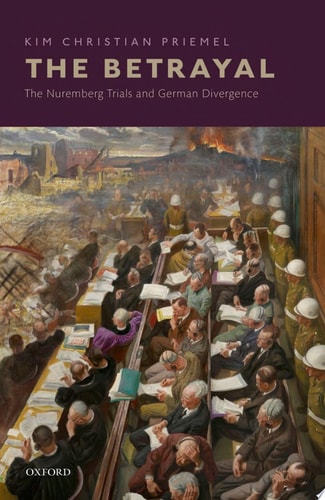
At The End Of World War Ii The Allies Faced A Threefold Challenge: How To Punish Perpetrators Of Appalling Crimes For Which The Categories Of 'genocide' And 'crimes Against Humanity' Had To Be Coined; How To Explain That These Had Been Committed By Germany, Of All Nations; And How To Reform Germans. The Allied Answer To This Conundrum Was The Application Of Historical Reasoning To Legal Procedure. In The Thirteen Nuremberg Trials Held Between 1945 And 1949, And In Corresponding Cases Elsewhere, A Concerted Effort Was Made To Punish Key Perpetrators While At The Same Time Providing A Complex Analysis Of The Nazi State And German History. Building On A Long Debate About Germany's Divergence From A Presumed Western Path Of Development, Allied Prosecutors Sketched A Historical Trajectory Which Had Led Germany To Betray The Western Model. Historical Reasoning Both Accounted For The Moral Breakdown Of A 'civilised' Nation And Rendered Plausible Arguments That This Had Indeed Been A Collective Failure Rather Than One Of A Small Criminal Clique. The Prosecutors Therefore Carefully Laid Out How Institutions Such As Private Enterprise, Academic Science, The Military, Or Bureaucracy, Which Looked Ostensibly Similar To Their Opposite Numbers In The Allied Nations, Had Been Corrupted In Germany Even Before Hitler's Rise To Power. While The Argument, Depending On Individual Protagonists, Subject Matters, And Contexts, Met With Uneven Success In Court, It Offered A Final Twist Which Was Of Obvious Appeal In The Cold War To Come: If Germany Had Lost Its Way, It Could Still Be Brought Back Into The Western Fold. The First Comprehensive Study Of The Nuremberg Trials, The Betrayal Thus Also Explores How History Underpins Transitional Trials As We Encounter Them In Today's Courtrooms From Arusha To The Hague.
Menrva's Summary
THE THESIS
This work investigates how Allied prosecutors utilized historical reasoning to frame the Nuremberg Trials as a means of both punishing Nazi perpetrators and explaining the systemic moral collapse of the German state. Author Kim Christian Priemel, a historian specializing in the twentieth century, examines the legal proceedings between 1945 and 1949 to demonstrate how the Allies constructed a narrative of German divergence from Western development. By analyzing the institutional corruption within the military, academia, and private enterprise, the book argues that the trials served as a mechanism to reconcile Germany's past with its potential future integration into the Western fold during the early Cold War.
THE SCOPE MAP
What You Will Find
- Analysis of the thirteen Nuremberg Trials conducted between 1945 and 1949.
- Examination of the legal strategies used to define genocide and crimes against humanity.
- Investigation into the historical arguments regarding German institutional failure.
- Comparative study of transitional justice mechanisms from post-war tribunals to modern courts in Arusha and The Hague.
Scope Limits
- The text does not provide a comprehensive biography of every individual defendant involved in the trials.
- It does not focus on the tactical military history of the war itself, but rather the legal and historical interpretation of the Nazi state.
THE AUTHORITY PERSPECTIVE
Scholars and historians recognize this text as a significant contribution to the study of transitional justice and the intellectual history of the Nuremberg proceedings. Readers frequently note the academic density of the prose, which provides a rigorous examination of how historical narratives are constructed within the constraints of a courtroom.
Page Count:
432
Publication Date:
2016-01-01
Publisher:
Oxford University Press
ISBN-10:
0191648523
ISBN-13:
9780191648526
History
International Law
World War
Legal History
Community Tags
Similar Books