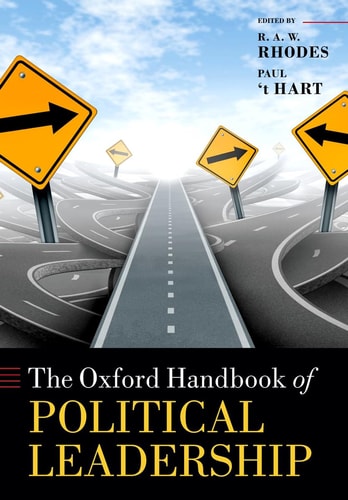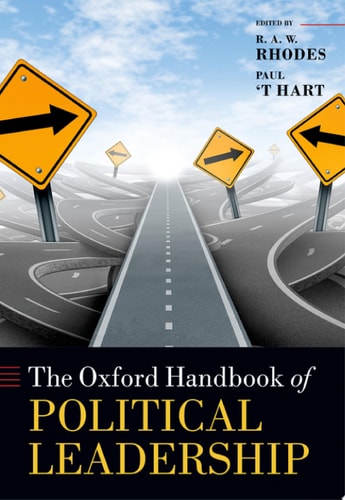
The Oxford Handbook of Political Leadership
0
0
As an Amazon Associate and affiliate partner, Menrva Books earns from qualifying purchases. Learn more
Author Description
Political Leadership Has Made A Comeback. It Was Studied Intensively Not Only By Political Scientists But Also By Political Sociologists And Psychologists, Sovietologists, Political Anthropologists, And By Scholars In Comparative And Development Studies From The 1940s To The 1970s. Thereafter, The Field Lost Its Way With The Rise Of Structuralism, Neo-institutionalism, And Rational Choice Approaches To The Study Of Politics, Government, And Governance. Recently, However, Students Of Politics Have Returned To Studying The Role Of Individual Leaders And The Exercise Of Leadership To Explain Political Outcomes. The List Of Topics Is Nigh Endless: Elections, Conflict Management, Public Policy, Government Popularity, Development, Governance Networks, And Regional Integration. In The Media Age, Leaders Are Presented And Stage-managed—spun—as The Solution To Almost Every Social Problem. Through The Mass Media And The Internet, Citizens And Professional Observers Follow The Rise, Impact, And Fall Of Senior Political Officeholders At Closer Quarters Than Ever Before. This Handbook Encapsulates The Resurgence By Asking, Where Are We Today? It Orders The Multidisciplinary Field By Identifying The Distinct And Distinctive Contributions Of The Disciplines. It Meets The Urgent Need To Take Stock. It Brings Together Scholars From Around The World, Encouraging A Comparative Perspective, To Provide A Comprehensive Coverage Of All The Major Disciplines, Methods, And Regions. It Showcases Both The Normative And Empirical Traditions In Political Leadership Studies, And Juxtaposes Behavioural, Institutional, And Interpretive Approaches. It Covers Formal, Office-based As Well As Informal, Emergent Political Leadership, And In Both Democratic And Undemocratic Polities.
Menrva's Summary
THE THESIS
This volume investigates the resurgence of political leadership as a central analytical category within political science, addressing how individual agency influences political outcomes in an era dominated by structuralist and institutionalist frameworks. Editors Paul 't Hart and R. A. W. Rhodes curate a collection of essays from international scholars to synthesize multidisciplinary perspectives, including political psychology, anthropology, and sociology. The text provides a comprehensive stock-taking of the field, juxtaposing empirical and normative traditions to evaluate how leadership functions across diverse global polities.
THE SCOPE MAP
What You Will Find
- Comparative analysis of leadership in both democratic and authoritarian regimes
- Theoretical frameworks covering behavioral, institutional, and interpretive approaches
- Examination of leadership roles in elections, policy-making, and governance networks
- Discussions on the impact of media and digital communication on political image management
Scope Limits
- Does not provide a singular, unified theory of leadership, but rather a survey of competing disciplinary perspectives
- Focuses primarily on high-level political officeholders rather than grassroots or community-level leadership
THE AUTHORITY PERSPECTIVE
Scholars and students of political science frequently cite this handbook as a foundational reference for understanding the evolution of leadership studies. Readers often note the academic density of the prose, which serves as a rigorous resource for researchers seeking a broad overview of current methodological debates in the field.
Page Count:
800
Publication Date:
2014-01-01
Publisher:
Oup Oxford
ISBN-10:
0191645850
ISBN-13:
9780191645853
Government
Leadership Studies
Public Policy