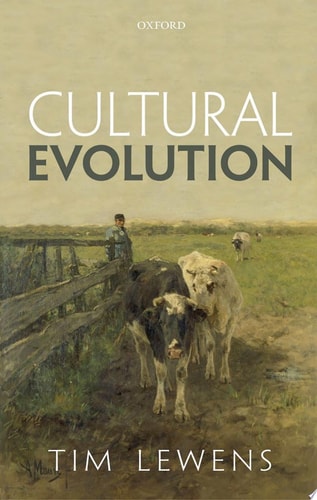
Cultural Evolution
0
0
As an Amazon Associate and affiliate partner, Menrva Books earns from qualifying purchases. Learn more
Author Description
Tim Lewens Aims To Understand What It Means To Take An Evolutionary Approach To Cultural Change, And Why It Is That This Approach Is Often Treated With Suspicion. Convinced Of The Exceptional Power Of Natural Selection, Many Thinkers—typically Working In Biological Anthropology, Cognitive Psychology, And Evolutionary Biology—have Suggested It Should Be Freed From The Confines Of Biology, And Applied To Cultural Change In Humans And Other Animals. At The Same Time, Others—typically With Backgrounds In Disciplines Like Social Anthropology And History—have Been Just As Vocal In Dismissing The Evolutionary Approach To Culture. What Drives These Disputes Over Darwinism In The Social Sciences? While Making A Case For The Value Of Evolutionary Thinking For Students Of Culture, Lewens Shows Why The Concerns Of Sceptics Should Not Be Dismissed As Mere Prejudice, Confusion, Or Ignorance. Indeed, Confusions About What Evolutionary Approaches Entail Are Propagated By Their Proponents, As Well As By Their Detractors. By Taking Seriously The Problems Faced By These Approaches To Culture, Lewens Shows How Such Approaches Can Be Better Formulated, Where Their Most Significant Limitations Lie, And How The Tools Of Cultural Evolutionary Thinking Might Become More Widely Accepted.
Menrva's Summary
THE THESIS
This book investigates the validity and limitations of applying Darwinian evolutionary frameworks to the study of human and animal cultural change. Tim Lewens, a philosopher of science, evaluates the ongoing friction between proponents of evolutionary approaches—often rooted in biology and psychology—and skeptics from the social sciences and history. He argues that while evolutionary thinking offers significant analytical value, the discipline suffers from conceptual misalignments that require rigorous refinement to gain broader academic acceptance.
THE SCOPE MAP
What You Will Find
- A critical analysis of cultural evolution theories in anthropology and psychology
- A philosophical framework for evaluating the application of natural selection to non-biological phenomena
- A balanced assessment of arguments from both biological and social science perspectives
Scope Limits
- The text does not provide a comprehensive history of all evolutionary theories
- It does not offer a practical manual for conducting empirical cultural research
THE AUTHORITY PERSPECTIVE
Experts recognize this work as a nuanced contribution to the philosophy of social science that successfully bridges the gap between biological and cultural disciplines. Readers frequently note that the prose is accessible to those with an interest in interdisciplinary theory, though it maintains a high level of academic rigor throughout the discussion.
Page Count:
192
Publication Date:
2015-01-01
Publisher:
Oup Oxford
ISBN-10:
0191655805
ISBN-13:
9780191655807
Philosophy of
Anthropology
Evolutionary Biology
Social Science
Community Tags
Similar Books