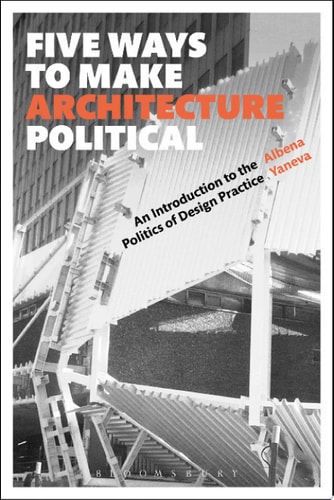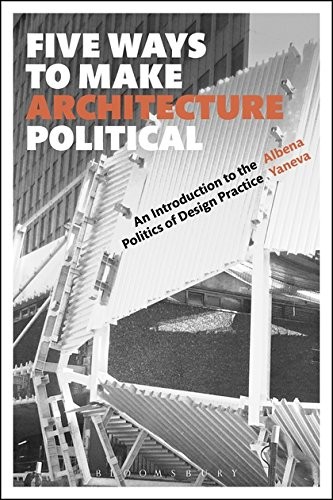
Five Ways to Make Architecture Political
0
0
As an Amazon Associate and affiliate partner, Menrva Books earns from qualifying purchases. Learn more
Author Description
Five Ways to Make Architecture Political presents an innovative pragmatist agenda that will inspire new thinking about the politics of design and architectural practice. Moving beyond conventional conversations about design and politics, the book shows how recent developments in political philosophy can transform our understanding of the role of designers. Introducing the framework of contemporary post-foundational politics in a way that is accessible to designers, it asks: how, when, and under what circumstances can design practice generate political relations? How can architectural design become more 'political'? Five central chapters, which can be read alone or in sequence, explore the answers to these questions. Powerfully pragmatic in approach, each presents one of the 'five ways to make architecture political', and each is illustrated by case studies from a range of contemporary situations around the world. We see how politics happens in architectural practice, learn how different design technologies have political effects, and follow how architects reach different publics, trigger reactions and affect different communities worldwide. Combining an accessible introduction to contemporary political concepts with a practical approach for a more political kind of practice, this book will stimulate debate among students and theorists alike, and inspire action in established and start-up practices
Menrva's Summary
THE THESIS
This book investigates how architectural design can actively generate political relations and influence societal structures. It challenges conventional discourse by integrating contemporary post-foundational political philosophy into the practice of design, asking how, when, and under what circumstances design can become more political. The author, Albena Yaneva, draws on her expertise to present a pragmatic agenda for architects and designers.
THE SCOPE MAP
- An accessible introduction to contemporary political concepts relevant to design.
- A framework for understanding the politics of design and architectural practice.
- Exploration of how design technologies produce political effects.
- Case studies illustrating political dimensions in contemporary architectural projects globally.
- Guidance on how architects can engage with different publics and communities.
THE AUTHORITY PERSPECTIVE
The book offers a pragmatic approach to making architecture political, integrating contemporary political philosophy for designers. It is structured around five central chapters, each presenting a distinct 'way' to politicize architectural practice, supported by global case studies. The work aims to stimulate debate among students and theorists and inspire action within architectural practices.
Page Count:
200
Publication Date:
2018-01-01
ISBN-10:
1350089710
ISBN-13:
9781350089716
Non-Fiction
Politics
Architecture
Design