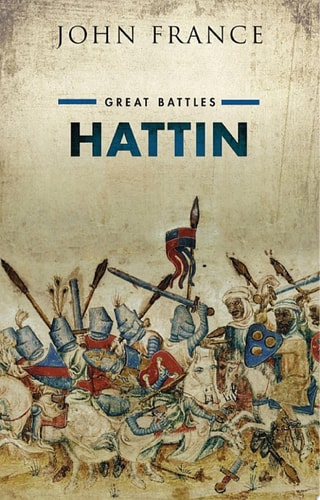
Hattin: Great Battles
0
0
As an Amazon Associate and affiliate partner, Menrva Books earns from qualifying purchases. Learn more
Author Description
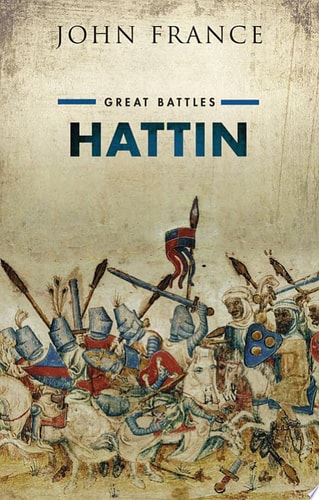
On 4 July 1187 the legendary Muslim leader Saladin destroyed the Crusader army of the Latin Kingdom of Jerusalem with a terrible slaughter at the battle of Hattin - and went on to restore the Holy City of Jerusalem to Islamic rule. The carnage at Hattin was the culmination of almost a century of religious wars between Christian and Muslim in the Holy Land. It had enormous consequences for the whole medieval world because it produced an intensification of holy war between Islam and Europe for over another century - and in retrospect marked the beginning of the end for the Crusader presence in the Middle East. In the 20th century memory of the battle was revived as a symbol of Arab hope for liberation from Crusader-Imperialism, and in the 21st it has become a rallying cry for radical Muslim fundamentalists in their struggle for the soul of Islam. In this new volume in the Great Battles series, John France analyses the origins and course of this pivotal battle, illuminating the roots of the bitter hatred which underlay it, and explains its significance in world history - from medieval times to the present.
Menrva's Summary
THE THESIS
This work investigates the strategic, religious, and geopolitical factors that culminated in the Battle of Hattin and assesses its enduring legacy in both medieval and modern history. John France, a recognized scholar in medieval military history, utilizes primary source accounts and tactical analysis to reconstruct the events of 1187. He argues that the destruction of the Crusader army was not merely a military defeat but a transformative event that reshaped the trajectory of holy war between Islam and Europe for centuries to follow.
THE SCOPE MAP
What You Will Find
- Detailed tactical reconstruction of the Battle of Hattin
- Analysis of the political climate within the Latin Kingdom of Jerusalem
- Examination of Saladin's military leadership and strategic objectives
- Historical overview of the Crusades leading up to the 12th century
- Discussion on the modern symbolic appropriation of the battle in political discourse
Scope Limits
- Does not provide a comprehensive biography of Saladin
- Does not cover the entirety of the Crusades beyond the immediate context of the battle's aftermath
THE AUTHORITY PERSPECTIVE
Experts highlight this text as a rigorous and accessible analysis of a pivotal medieval engagement. Readers frequently note the author's ability to balance technical military detail with broader historical context.
Page Count:
238
Publication Date:
2015-01-01
Publisher:
OUP Oxford
ISBN-10:
0191668966
ISBN-13:
9780191668968
History
Middle Eastern
Crusades
Military History
Community Tags
Similar Books