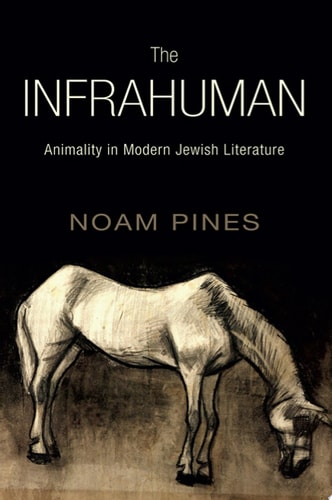
The Infrahuman Animality in Modern Jewish Literature
0
0
As an Amazon Associate and affiliate partner, Menrva Books earns from qualifying purchases. Learn more
Author Description
Argues that Jewish writers used depictions of Jews as animals to question prevalent notions of Jewish identity. The Infrahuman explores a little-known aspect in major works of Jewish literature from the period preceding World War II, in which Jewish writers in German, Hebrew, and Yiddish employed figures of animals in pejorative depictions of Jews and Jewish identity. Such depictions are disturbing because they sometimes rival common anti-Semitic stereotypes, and have often been explained away as symptoms of Jewish self-hatred. In this book, Noam Pines shows how animality emerged in Jewish literature not as a biological or conceptual category, but as a theological figure of exclusion from a state of humanity and Christianity alike. By framing the human-animal question in theological terms rather than in racial-biological terms, writers such as Heinrich Heine, S. Y. Abramovitsh, Hayim Nachman Bialik, Uri Zvi Greenberg, Franz Kafka, S. Y. Agnon, and Paul Celan subjected the pejorative designations of Jewish identity to literary elaboration and to philosophical negotiation. A work of stunning originality. Noam Pines revisits texts across the expanse of European and modern Jewish culture, excavating a preoccupation with Jewish animality that is no less illuminating than it is unsettling. Steven J. Zipperstein, author of Pogrom: Kishinev and the Tilt of History In this scrupulous and subtle book, Noam Pines shines new light on how animality, a well-worn theological figure of exclusion, can be seen afresh as a leitmotif of the intimate dialogue Jewish writers conducted with European literary traditions. With an exceptionally sure touch, Pines tracks this motif from Zionist literature through the postwar responses to Kafkas legacy. The Infrahuman is a profound and highly commendable achievement. Vivian Liska, author of When Kafka Says We: Uncommon Communities in German-Jewish Literature and German-Jew
Page Count:
202
Publication Date:
2018-08-01
Publisher:
SUNY Press
ISBN-10:
1438470673
ISBN-13:
9781438470672
Community Tags
Other Editions(2)
Reader Comments
Share Your Thoughts
No comments yet. Be the first to share your thoughts!