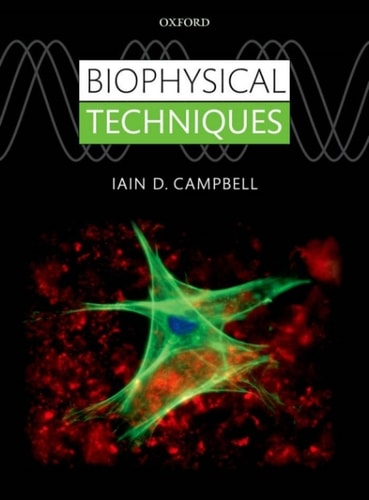
Biophysical Techniques
0
0
As an Amazon Associate and affiliate partner, Menrva Books earns from qualifying purchases. Learn more
Author Description
Many current questions in biology are probed by using a range of biophysical methods, often in tandem. These increasingly powerful and sophisticated tools allow us to study the structure and dynamics of the complicated mixture of interacting molecules that make up the living cell. Biophysical Techniques explains in a readily-accessible way the basics of the various methods available - including those used to study molecular structure, cell structure, and dynamic interactions - so that students can understand the principles behind the different methods used, and begin to appreciate which tools can be used to probe different biological questions, and the pros and cons of each. Exploring the latest enhancements to classical techniques, and introducing computational techniques that have emerged relatively recently, the book provides a broad survey of the range of techniques now at the disposal of an investigator. The biophysical techniques introduced can be explained in physical and mathematical terms; instead of assuming a detailed knowledge of physics or maths, however, the book uses a series of Tutorials and Boxes to provide essential background guidance on these topics, giving the reader extra support in fully understanding the subject. Learning and understanding is supported still further with thought-provoking end-of-chapter problems to illustrate to the reader how a range of biophysical techniques have been used in contemporary research. In an age in which we are probing the working of biological systems in more detail, and with more refinement, than ever before, Biophysical Techniques is the ideal guide for any student who needs to understand the power of biophysical techniques in biological research.
Menrva's Summary
THE THESIS
This text investigates the fundamental principles and practical applications of biophysical methods used to analyze the structure and dynamics of biological molecules within living cells. Author Iain D. Campbell, a recognized expert in the field, provides a comprehensive framework that bridges the gap between complex physical concepts and biological inquiry. By focusing on the utility of various tools, the book enables students to select appropriate methodologies for specific research questions while navigating the inherent limitations of each technique.
THE SCOPE MAP
What You Will Find
- Overviews of methods for studying molecular and cellular structure
- Explanations of dynamic interaction analysis
- Tutorials and supplemental boxes for physical and mathematical background
- End-of-chapter problems based on contemporary research
Scope Limits
- Does not assume advanced prior knowledge of physics or mathematics
- Focuses on survey-level breadth rather than exhaustive technical manuals for every specific instrument
THE AUTHORITY PERSPECTIVE
Academic reviewers and students frequently highlight the text's accessibility and its success in simplifying complex physical principles for a biological audience. Experts often cite this work as a foundational resource for undergraduates seeking to understand the integration of diverse biophysical tools in modern research.
Page Count:
484
Publication Date:
2012-01-01
Publisher:
OUP Oxford
ISBN-10:
0191666149
ISBN-13:
9780191666148
Science
textbook
Academic
Biology
Allied Health
Biophysics
Medical
Community Tags
Similar Books