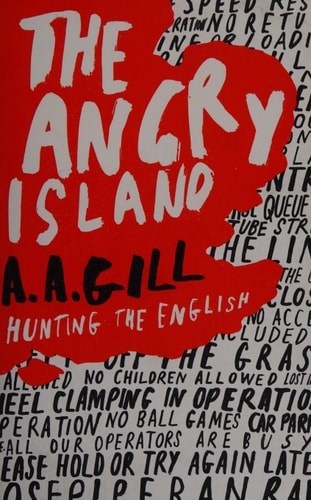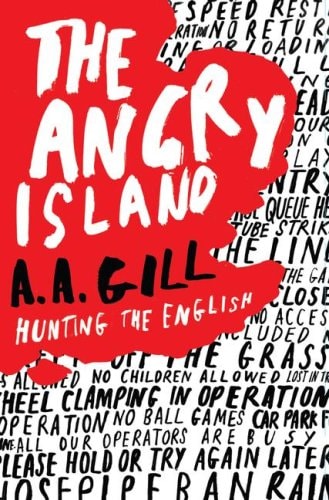
The Angry Island: Hunting the English
0
0
As an Amazon Associate and affiliate partner, Menrva Books earns from qualifying purchases. Learn more
Author Description
Think of England, and anger hardly springs to mind as its primary national characteristic. Yet in The Angry Island, A. A. Gill argues that, in fact, it is plain old fury that is the wellspring for England's accomplishments. The default setting of England is anger. The English are naturally, congenitally, collectively and singularly livid much of the time. They're incensed, incandescent, splenetic, prickly, touchy, and fractious. They can be mildly annoyed, really annoyed and, most scarily, not remotely annoyed. They sit apart on their half of a damply disappointing little island, nursing and picking at their irritations. The English itch inside their own skins. They feel foreign in their own country and run naked through their own heads.Perhaps aware that they're living on top of a keg of fulminating fury, the English have, throughout their history, come up with hundreds of ingenious and bizarre ways to diffuse anger or transform it into something benign. Good manners and queues, cul-de-sacs and garden sheds, and almost every game ever invented from tennis to bridge. They've built things, discovered stuff, made puddings, written hymns and novels, and for people who don't like to talk much, they have come up with the most minutely nuanced and replete language ever spoken -- just so there'll be no misunderstandings.The Angry Island by turns attacks and praises the English, bringing up numerous points of debate for Anglophiles and anyone who wonders about the origins of national identity. This book hunts down the causes and the results of being the Angry Island.
Menrva's Summary
THE THESIS
This book investigates the assertion that anger is the fundamental characteristic driving English identity and accomplishment. A. A. Gill, known for his sharp cultural observations, posits that a pervasive, underlying fury fuels England's historical achievements and daily life. The work explores how this national temperament has manifested in everything from social customs like queuing and good manners to creative endeavors such as literature, music, and games, all serving as mechanisms to manage or transform this inherent anger. The book examines the paradox of a nation often perceived as reserved, yet driven by a deep-seated emotional current.
THE SCOPE MAP
- Analysis of anger as a core component of English national identity.
- Exploration of historical and cultural manifestations of English anger.
- Discussion of social constructs and inventions designed to diffuse or channel anger.
- Examination of the relationship between national temperament and cultural output (literature, games, etc.).
- Critique and praise of English characteristics and their origins.
- Investigation into the concept of national identity through a lens of emotional disposition.
THE AUTHORITY PERSPECTIVE
The book presents a provocative thesis, likely sparking debate among readers and critics alike regarding its central argument about English anger. Its approach, which alternately attacks and praises the English, suggests a nuanced yet potentially controversial exploration of national identity. The work is positioned to engage those interested in cultural analysis and the underpinnings of societal characteristics. It aims to provoke thought on how perceived national traits shape a country's history and culture.
Page Count:
227
Publication Date:
2007-01-01
Publisher:
Simon & Schuster
ISBN-10:
1416531734
ISBN-13:
9781416531739
Non-Fiction
History
Social Commentary