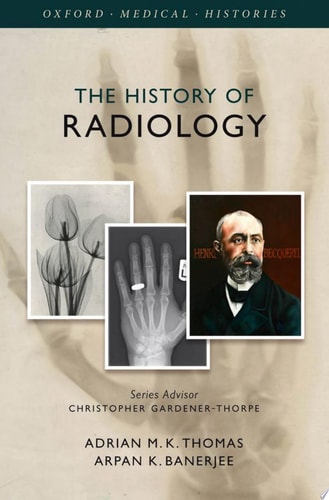
The History of Radiology
0
0
As an Amazon Associate and affiliate partner, Menrva Books earns from qualifying purchases. Learn more
Author Description
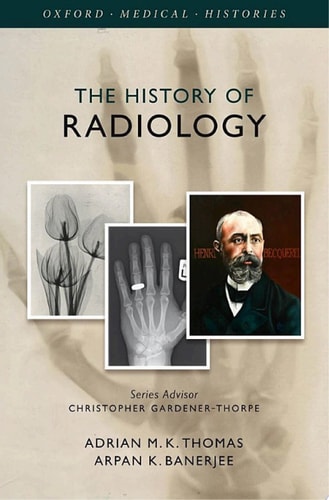
In 1890, Professor Arthur Willis Goodspeed, a professor of physics at Pennsylvania USA was working with an English born photographer, William N Jennings, when they accidentally produced a Röntgen Ray picture. Unfortunately, the significance of their findings were overlooked, and the formal discovery of X-rays was credited to Wilhelm Roentgen in 1895. The discovery has since transformed the practice of medicine, and over the course of the past 130 years, the development of new radiological techniques has continued to grow. The impact has been seen in virtually every hospital in the world, from the routine use of ultrasound for pregnancy scans, through to the diagnosis of complex medical issues such as brain tumours. More subtly, X-rays were also used in the discovery of DNA and in military combat, and their social influence through popular culture can be seen in cartoons, books, movies and art. Written by two radiologists who have a passion for the history of their field, The History of Radiology is a beautifully illustrated review of the remarkable developments within radiology and the scientists and pioneers who were involved. This engaging and authoritative history will appeal to a wide audience including medical students studying for the Diploma in the History of Medicine of the Society of Apothecaries (DHMSA), doctors, medical physicists, medical historians and radiographers.
Menrva's Summary
THE THESIS
How did the accidental discovery of X-rays in the late 19th century evolve into a foundational pillar of modern diagnostic medicine and global scientific culture? Authors Adrian M. K. Thomas and Arpan K. Banerjee, both practicing radiologists, utilize their clinical expertise to document the progression of radiological science. They synthesize historical accounts of key pioneers with the technical evolution of imaging modalities to demonstrate the field's profound impact on medical practice and societal norms over the last 130 years.
THE SCOPE MAP
What You Will Find
- Chronological development of X-ray technology from 1895 to the present.
- Analysis of the intersection between radiology, military application, and molecular biology.
- Biographical sketches of the scientists and medical pioneers who advanced the field.
- Examination of radiology's representation in popular culture, including art and film.
Scope Limits
- The text focuses primarily on the history of the discipline rather than serving as a clinical manual for current radiological procedures.
- It does not provide exhaustive technical specifications for modern digital imaging hardware.
THE AUTHORITY PERSPECTIVE
Experts and medical historians recognize this work as a comprehensive and accessible resource for students and professionals alike. Readers frequently note the balance between technical detail and historical narrative, making it a standard reference for those studying the evolution of medical diagnostics.
Page Count:
236
Publication Date:
2013-01-01
Publisher:
OUP Oxford
ISBN-10:
0191669717
ISBN-13:
9780191669712
Non-Fiction
Science History
Radiology
Radiology & Nuclear Medicine
Medicine
Medical
Allied Health
MEDICAL History