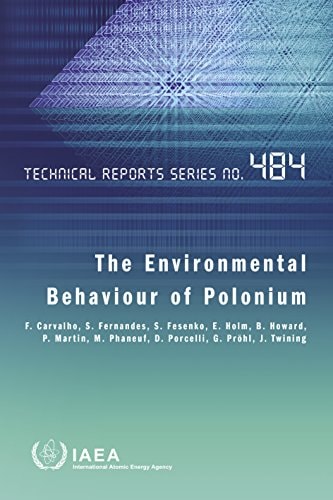
The Environmental Behaviour of Polonium
0
0
As an Amazon Associate and affiliate partner, Menrva Books earns from qualifying purchases. Learn more
Author Description
Polonium-210 is an alpha emitting radionuclide with no radioactive progeny and produces only very-low-intensity gamma rays at very low abundance. This means doses largely arise from internal exposure. In addition to the relatively high ingestion does coefficient of 210Po, radionuclide transfer in the environment results in high activity concentrations in certain foods. This publication focuses on radionuclide transfers in terrestrial, freshwater and marine environments, and provides information on key transfer processes, concepts and models.--Page 4 of cover.
Menrva's Summary
THE THESIS
This publication investigates the environmental behavior of Polonium-210, a critical alpha-emitting radionuclide. The book details how Polonium-210, with its minimal gamma emissions and lack of radioactive progeny, primarily poses risks through internal exposure. It examines the significant ingestion dose coefficient and the environmental transfer processes that lead to high activity concentrations in various food sources. The core focus is on radionuclide transfers within terrestrial, freshwater, and marine ecosystems, presenting essential information on transfer processes, concepts, and modeling.
THE SCOPE MAP
- Radionuclide transfers in terrestrial environments
- Radionuclide transfers in freshwater environments
- Radionuclide transfers in marine environments
- Key transfer processes for Polonium-210
- Concepts related to radionuclide environmental behavior
- Models for predicting Polonium-210 environmental distribution
THE AUTHORITY PERSPECTIVE
This publication is a technical report focusing on the environmental behavior of Polonium-210. It is likely intended for specialists in radiochemistry, environmental science, and nuclear safety. The detailed examination of transfer processes and models suggests a rigorous, data-driven approach to understanding radionuclide distribution in various ecosystems.
Page Count:
255
Publication Date:
2017-01-01
Publisher:
International Atomic Energy Agency
ISBN-10:
9201121164
ISBN-13:
9789201121165
Science
Non-Fiction
Radiochemistry
Nuclear Physics
Community Tags
Similar Books