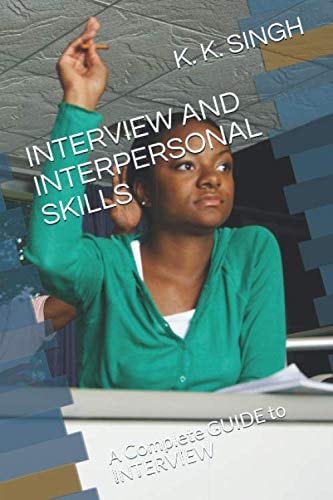
Interview and Interpersonal Skills: A Complete Guide to Interview
0
0
As an Amazon Associate and affiliate partner, Menrva Books earns from qualifying purchases. Learn more
Author Description
English has become a global language. In the minds of many worldwide, it guarantees a better life through enhanced social and economic opportunities. As a result, English teachers are in high demand. Some claim that English is attractive because as it has spread throughout the world, it has severed its ties from any specific culture, making it easily malleable to fit the needs of those who adopt it. Grammar rules and vocabulary can simply be taught to eager learners so they can use English for social and economic advancement. However, learning English is more than mastering a certain number of words and memorizing a set of grammar rules. Although plugging words into scientific formulas might be the key to success in chemistry or physics, it is less effective for language learners. Language acquisition studies have discovered that both native and non-native speakers learn English best not by being taught rules but by interacting with other users of the language, either orally or through print. This interaction introduces a social element to grammar that brings with it hidden social messages. For example, suppose a language learner has been taught that English has a very simple way to make requests: simply say the verb with no subject being expressed, as in “Open the door.” After class, the student is carrying a pile of books and comes to a closed door. What would be the reaction of other English speakers if the student were to shout out to someone passing nearby, “Open the door”? The student would probably be considered rude. “Could you please open the door?” which has the form of a question rather than a command, would probably be considered politer. Suppose an English teacher sees one of her students writing with a crayon rather than a pencil. She helpfully asks, “Don’t you have a pencil?” If the student answers “yes,” does that mean that the student does or does not have a pencil? The answer depends on which part of the world the student is from.The systematic way
Menrva's Summary
THE THESIS
This book aims to equip readers with the essential skills for successful job interviews and effective interpersonal communication. It addresses the critical need for individuals to master not only the technical aspects of their profession but also the nuanced art of presenting themselves and interacting with others in professional settings, particularly in the context of a globalized world where English proficiency is increasingly valued.
THE SCOPE MAP
- Strategies for effective interview performance
- Techniques for building rapport with interviewers
- Understanding and navigating cultural nuances in communication
- Developing strong interpersonal skills for professional advancement
- The role of language acquisition beyond grammar rules
- Practical advice for social and economic opportunities through English proficiency
THE AUTHORITY PERSPECTIVE
The book is structured to provide practical guidance for individuals seeking to enhance their career prospects through improved interview and communication abilities. It emphasizes that mastering a language like English involves more than rote memorization of rules, highlighting the importance of social interaction and cultural context. The content suggests a focus on actionable advice for professional development in a globalized economy. The approach aims to bridge the gap between theoretical knowledge and real-world application in professional settings.
Page Count:
285
Publication Date:
2019-07-27
Publisher:
Independently published
ISBN-10:
1084103818
ISBN-13:
9781084103818
Business
Non-Fiction
Self-help
Communication
Community Tags
Similar Books