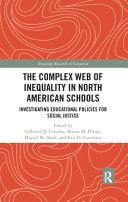
The Complex Web of Inequality in North American Schools: Investigating Educational Policies for Social Justice
0
0
As an Amazon Associate and affiliate partner, Menrva Books earns from qualifying purchases. Learn more
Author Description
The Complex Web of Inequality in North American Schools analyzes and challenges the critical gaps and inequalities that persist in the American school system. Showing how historical biases have been inherited in current polices relating to non-dominant youth, the text calls for educational reforms that perform in the name of social justice. This edited collection carefully interrogates how technocratic educational policies and reforms are often unequipped to address the interplay of political, social, economic, ideological factors that are at the roots of educational injustice. Considering the most vulnerable student populations, original case studies explore how inadequate structures, practices, and beliefs have increased marginalization, and highlight those instances in which policy has proved effective in reducing opportunity gaps between economically rich and poor students; between white, Asian, Black and Latino youth; between native English speakers and second language learners; highlighting racial integration and unequal American Indian education; and for students with special educational needs. The insights into such policies shed light on the complex web of historically embedded inequities that continue to shape the construction, roll-out, and consequences of education policy for the most marginalized youth populations today. This volume will be of interest to graduate, and postgraduate students, researchers and academics in the fields of education policy, sociology of education, economics of education, and history of education, and well as policy evaluation
Menrva's Summary
THE THESIS
This book investigates the persistent educational inequalities in North American schools and challenges the policies that perpetuate them. Gilberto Q. Conchas's edited collection examines how historical biases are embedded in current policies affecting non-dominant youth, advocating for reforms that promote social justice. The text critically analyzes how technocratic policies often fail to address the root causes of educational injustice, which stem from complex political, social, economic, and ideological factors. Through original case studies, the book explores how inadequate structures and beliefs increase marginalization, while also highlighting policies that have effectively reduced opportunity gaps for various student populations.
THE SCOPE MAP
- Analysis of critical gaps and inequalities in the American school system.
- Interrogation of technocratic educational policies and reforms.
- Exploration of the interplay of political, social, economic, and ideological factors in educational injustice.
- Original case studies on inadequate structures, practices, and beliefs increasing marginalization.
- Highlighting effective policies in reducing opportunity gaps between different socioeconomic groups.
- Examination of disparities between white, Asian, Black, and Latino youth.
- Discussion of racial integration and unequal American Indian education.
- Consideration of educational needs for students with special educational needs and second language learners.
THE AUTHORITY PERSPECTIVE
This volume is designed for graduate and postgraduate students, researchers, and academics in fields such as education policy, sociology of education, economics of education, and history of education. It also aims to inform policy evaluation professionals. The collection's focus on critical analysis of existing policies and advocacy for social justice-oriented reforms suggests it is intended to stimulate academic discourse and inform practical policy development. The detailed case studies and theoretical interrogations position it as a resource for understanding and addressing deep-seated educational inequities.
Page Count:
232
Publication Date:
2019-08-22
Publisher:
Taylor & Francis Group
ISBN-10:
1315170159
ISBN-13:
9781315170152
Non-Fiction
History
Politics
Education Policy
Social justice
Sociology Of Education
Inequality
Community Tags
Similar Books